The CGRP Revolution
Are These Migraine Miracle Drugs All They’re Cracked Up to Be?
1. Meet CGRP: The Tiny Protein Wreaking Havoc in Your Head
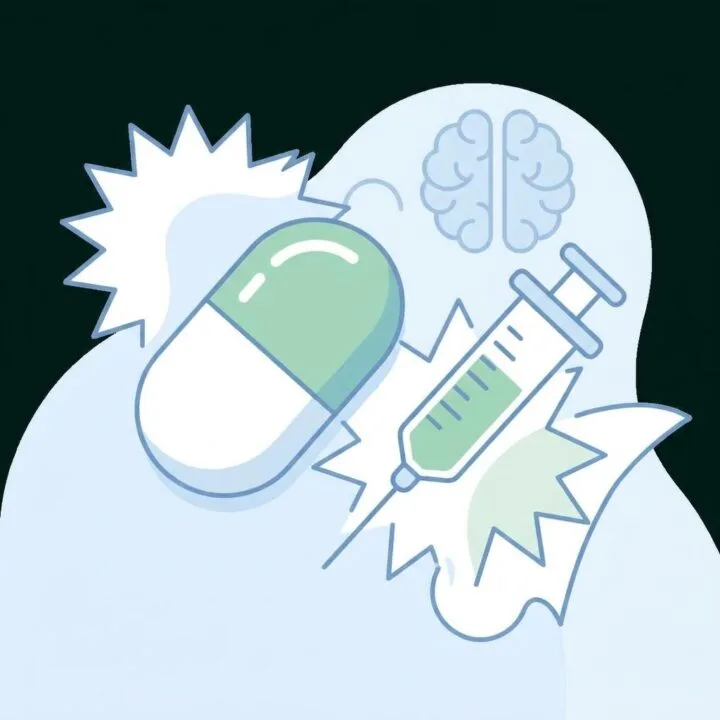
What exactly is CGRP? It stands for Calcitonin Gene-Related Peptide, a neuropeptide responsible for dilating blood vessels, triggering inflammation, and amplifying pain signals during a migraine attack. CGRP medications step in like molecular bouncers—specifically blocking either the protein itself or the receptors it tries to bind to. There are two main classes:
Monoclonal Antibodies (mAbs)
The heavy-duty preventatives. These are injectable or IV treatments (Aimovig, Ajovy, Emgality, and Vyepti) that you take periodically, circulating in your bloodstream for months to provide a constant shield.
Gepants
The versatile alternatives. These are small-molecule oral pills or nasal sprays (Ubrelvy, Nurtec ODT, Qulipta, and Zavzpret) used to either stop a migraine in its tracks or prevent one from starting.
Visualizing the Mechanism
Understanding how these inhibitors break the pain loop is key to appreciating this medical breakthrough.
2. From Liver Scares to “The Brain Prize”: A 40-Year Journey
Back in the 1980s, scientists Lars Edvinsson and Peter Goadsby figured out migraines weren’t just a simple blood vessel issue—they were a complex neurological event driven by CGRP spikes. This was a massive paradigm shift.
The first-generation “gepants” looked incredibly promising but hit a wall between 2004 and 2011, getting scrapped in Phase III trials due to severe liver toxicity. But in 2018, the FDA finally approved the first three preventative mAbs that effectively bypassed the liver entirely, changing the game forever.
Fast forward to 2021, and the researchers behind this 40-year quest were awarded the Brain Prize—essentially the Nobel Prize of neuroscience.
3. The New “Gold Standard”
(Goodbye, “Fail-First” Policies!)
In a massive win for patients, the 2024 American Headache Society guidelines officially crowned CGRP therapies as first-line options. This means patients are no longer medically required to suffer through grueling “step therapy”—failing on older, generic meds—before getting access to treatments that actually target their disease.

A Patient’s Perspective
Hear a firsthand account of the impact of modern migraine treatments on daily life.
4. The Catch: Missing Safety Data, Sticker Shock, and Debates
Real-World Safety Gap
Clinical trials aren’t always the whole story. Aimovig trials claimed a 3% constipation rate, but real-world data shows it’s 14–43%. We’re also seeing emerging complaints of high blood pressure and Raynaud’s phenomenon.
The Cardiovascular Debate
CGRP is a natural vasodilator that protects the heart and brain during emergencies. If you block it in patients with underlying heart disease, are you stripping away a crucial bodily defense mechanism?
The Pregnancy Puzzle
Preventative mAbs have a half-life of 5-6 months. With unknown safety profiles, women of childbearing age face a massive logistical headache when planning a family.
The $10,000 Question
These meds run $7,000 to $10,000 a year. Despite new guidelines, insurers often fight back with strict fail-first hurdles, creating huge economic barriers.
5. What’s Next? Gene Therapy, New Targets, and Botox Combos
The future is bright. Clinical trials are testing CGRP blockers for cluster headaches, vestibular migraines, and post-traumatic headaches. Beyond CGRP, drugs targeting the PACAP pathway (like Bocunebart) have entered Phase 3 trials. We’re even seeing sci-fi level research into one-time gene therapies and aggressive combination treatments with Botox for the most stubborn cases.
Frequently Asked Questions
How safe are CGRP inhibitors long-term?
They have a generally safe profile over the last eight years, but cardiovascular risks and gastrointestinal issues are being closely monitored. Multi-decade safety studies are not yet available.
Do these medications cause weight gain?
Weight gain was not a primary side effect in clinical trials. Medical consensus attributes any reported weight fluctuations to lifestyle improvements and increased appetite after pain reduction, rather than a direct effect of the medication.
How quickly do Gepants work?
Oral gepants typically provide relief within 30-60 minutes. Nasal spray variants are even faster, working in as little as 15 minutes.
Is insurance coverage a problem?
It varies widely. Despite updated guidelines recommending immediate access, insurers often mandate strict approval processes and documentation of failed alternative treatments before approving funding.
Conclusion
The landscape of headache medicine has transformed. Patients are encouraged to evaluate risks, consult headache specialists, and advocate for the best available therapies.
