
Educational information · Not medical advice
In brief
Jaw clenching Adderall or Vyvanse? Why stimulants can trigger bruxism, how to protect your teeth, and what to ask your prescriber before any dose change.
In this article
- Can Adderall or Vyvanse cause jaw clenching?
- Why do stimulants make the jaw muscles work harder?
- Is it the medication, or something else?
- Awake clenching vs sleep grinding: why the timing matters
- Adderall vs Vyvanse: is one worse for your jaw?
- How can you protect your jaw and teeth?
- What should you ask your prescriber?
- Frequently asked questions
- Conclusion
- Sources
Key Takeaways
- Jaw clenching Adderall and Vyvanse users report is a recognised pattern: bruxism is listed in the postmarketing experience for Vyvanse, and teeth clenching and bruxism appear in Adderall labelling.
- Stimulants increase dopamine and norepinephrine activity, which can raise muscle activity and focus-related bracing — but ADHD itself is also associated with bruxism, so timing alone does not prove the drug is the only cause.
- Do not stop or change a prescribed stimulant on your own because of jaw pain. Record the timing, protect your teeth, and bring a clear pattern to your prescriber.
- A night guard can protect teeth during sleep, but it does not stop daytime clenching — awake clenching needs awareness cues, jaw rest, and a prescriber review.
If you have noticed jaw clenching Adderall doses seem to bring on — a tight masseter by mid-morning, sore cheeks by the end of a study session, or teeth that feel tender when the medication wears off — you are not imagining the pattern. Jaw clenching Adderall and Vyvanse users describe is usually awake bruxism: repetitive or sustained tooth contact, bracing, or thrusting of the jaw while you are awake. This article explains what the labels and reviews actually say, how to tell a medication pattern from other causes, and how to protect your jaw and teeth without stopping a medicine that may be helping you.
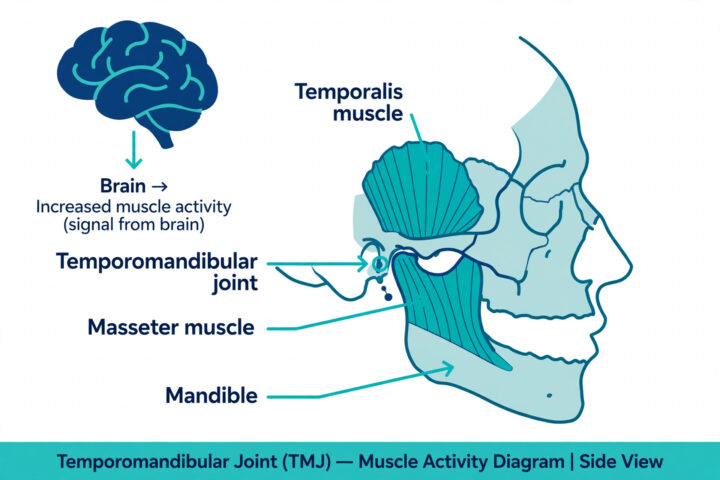
A quick note on terms: TMJ is the temporomandibular joint in front of each ear. TMD means temporomandibular disorder, the group of more than 30 conditions affecting the jaw joint and the muscles that move it, as the U.S. National Institute of Dental and Craniofacial Research (NIDCR) defines them. Bruxism is not a TMD by itself, but repeated clenching can overload the chewing muscles and aggravate jaw pain.
Can Adderall or Vyvanse cause jaw clenching?
Yes, it can contribute — and the official labelling is a good place to start, because it separates a reported effect from internet anecdote. For Vyvanse (lisdexamfetamine), bruxism is listed among the adverse reactions identified during postapproval use. That listing does not tell you how often it happens, and the label itself notes that postmarketing reports come from a population of uncertain size, so a frequency cannot be reliably estimated from them.
For Adderall XR (mixed amphetamine salts), the labelling reported tooth disorder — with teeth clenching given as an example — in 2 to 4 percent of adult patients in a trial, at a higher incidence than placebo, and bruxism appears among the central nervous system reactions identified during postapproval use of amphetamine products. Again, that is evidence that jaw clenching Adderall prescribers should know about, not proof that every case on Adderall is caused by Adderall.
The research literature points in the same direction, with limits. A 2026 systematic review in Frontiers in Psychiatry pooled 16 studies with 16,348 participants and found that people with ADHD were about twice as likely to present with bruxism as controls. Within that review, a large U.S. dental study found that patients with ADHD who were taking stimulants reported significantly higher odds of clenching, jaw pain, and headaches than non-ADHD, non-stimulant users — and patients taking stimulants without an ADHD diagnosis also had higher odds of clenching and headaches. That second finding matters: it suggests the medication, not only the diagnosis, may play a part.
About 2x — in a 2026 systematic review of 16 studies and 16,348 participants, people with ADHD had pooled odds of bruxism about twice those of controls (OR 2.16; 95% CI 1.72–2.71). An association is not proof of cause in any one person.
Why do stimulants make the jaw muscles work harder?
Adderall contains mixed amphetamine salts, and Vyvanse is a prodrug that the body converts to dextroamphetamine. Both are central nervous system stimulants that increase dopamine and norepinephrine signalling. Those same systems help regulate movement and muscle activity, which is one proposed reason stimulant medicines can increase repetitive jaw-muscle activity in some people.
There is also a simpler, behavioural layer. Stimulants sharpen focus, and focused work is when many people brace without noticing: teeth together, tongue pressed up, shoulders raised, during a deadline, a game, or a long drive. That is the same daytime pattern described for anxiety jaw clenching and the stress–pain loop — sustained contact, not loud grinding — and a stimulant can make the bracing longer and harder to notice until the muscles ache.
Dry mouth, reduced appetite, poor sleep, and extra caffeine can add to the load. None of them proves a drug effect on its own, but together they explain why jaw clenching Adderall users report often peaks on busy, under-slept, over-caffeinated days rather than on quiet ones.
Is it the medication, or something else?
Timing is the most useful clue you can bring to an appointment. Note when the clenching started or worsened: after starting the stimulant, after a dose increase, after switching from immediate-release to extended-release, or after adding another medicine. SSRI and SNRI antidepressants are a common confounder — many readers first meet this problem as jaw clenching on Zoloft or Lexapro — and taking both a stimulant and an SSRI can make the source harder to untangle without a timeline.
Other contributors to rule out include sleep apnea, reflux, anxiety, and pre-existing sleep bruxism that was already wearing the teeth before any stimulant was prescribed. A dentist can help here: fresh wear facets, cracked fillings, cheek ridging, and enlarged masseter muscles tell a different story from a joint problem inside the TMJ itself. If the pain is mainly muscle tenderness that builds through the day, that points toward clenching load. Clicking, locking, or pain centred in the joint needs its own assessment.
Keep a simple two-week log: dose and timing, when the jaw felt tight, sleep quality, caffeine, and any headache. Patterns in that log — tight only on medication days, easing on a prescriber-agreed break, or worst in the last hours before the dose wears off — are far more useful than a general statement that your jaw hurts.
Awake clenching vs sleep grinding: why the timing matters
Awake bruxism and sleep bruxism are managed differently, so name which one you have. Awake clenching is sustained tooth contact or bracing while you work, drive, or concentrate. You can learn to catch and release it. Sleep bruxism happens during sleep, may involve grinding sounds a partner hears, and is usually discovered from morning soreness, a partner report, or dental wear.
Stimulants taken in the morning can still affect the night indirectly if they delay sleep or fragment it, and a long-acting preparation taken late can still be active at bedtime. If your symptoms are mainly on waking, tell your prescriber and your dentist both — the answer may involve dose timing and a protective appliance, not only daytime habit work. If your symptoms build during the day and ease in the evening, awake habit reversal is likely to matter more than a guard.
Adderall vs Vyvanse: is one worse for your jaw?
There is no good head-to-head evidence that one of these two amphetamine medicines is reliably worse for jaw clenching than the other, and this article will not invent a ranking the studies do not support. Both deliver amphetamine, both carry bruxism-related labelling, and individual response varies more than brand-to-brand averages.
What can differ is the shape of the day. Vyvanse is converted gradually and tends to have a smoother, longer course; Adderall XR combines immediate and delayed beads. Some people clench most during a peak, others during the wear-off and rebound tiredness. Your log, not a forum poll, will show which phase is your problem — and that phase is what a prescriber can act on, by discussing timing, formulation, or dose, within the ADHD treatment plan as a whole.
How can you protect your jaw and teeth?
Start with the conservative, reversible steps the NIDCR recommends for TMD symptoms generally: eat softer foods during a flare, avoid gum and very chewy foods, apply heat or cold to the face, gently stretch the jaw muscles, and reduce habits such as jaw clenching, gum chewing, or nail biting. Self-management and behavioural approaches — awareness, relaxation, and set goals — are part of that first line, not an afterthought.
For awake clenching, use the resting position as a cue: lips together, teeth apart, tongue relaxed on the floor of the mouth. Put the cue where the clenching happens — a note on the monitor, a phone prompt before meetings, a sticker on the steering wheel. When you catch your teeth together, drop the jaw slightly and breathe out slowly. Short, frequent releases beat one long massage at the end of a painful day.
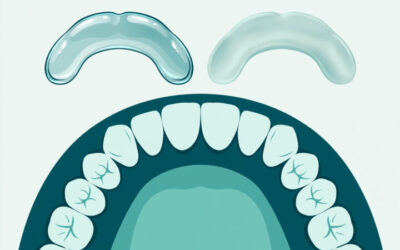
For teeth protection, talk to a dentist about an intraoral appliance. The NIDCR describes these devices — night guards, splints, or stabilisation appliances — as fitting over the teeth to protect them and help with habit reversal; they do not change the teeth or bite. Our comparison of a TMJ splint vs a night guard explains the difference. Be honest about the limit: a guard protects teeth at night, it does not switch off daytime jaw clenching Adderall focus can drive, and evidence that appliances improve TMD pain itself is limited.

If muscle pain is the main problem, ask what short-term pain options are appropriate for you rather than self-prescribing. Our guide to muscle relaxers for TMJ explains why those medicines are short-term, sedating, and not a substitute for reducing the clenching load itself.
What should you ask your prescriber?
Bring the log, the dental findings, and specific questions. Do not stop, halve, or double a prescribed stimulant on your own because your jaw hurts — abrupt changes can undo the benefit the medicine was prescribed for and can cause their own problems.
- “My jaw clenching started or worsened after [starting / this dose change]. Could the stimulant be contributing?”
- “Would changing the timing, formulation, or dose be reasonable to test, given my ADHD control?”
- “Could another medicine I take — an SSRI or SNRI, for example — be adding to the bruxism?”
- “Should my dentist fit a guard now, or should we first see whether a medication change settles it?”
- “What jaw or dental symptoms should make me contact you sooner?”
Prescriber options reported for medication-related bruxism in the literature generally start with reviewing the suspected drug, its dose, and its timing, and considering a change only as part of the overall treatment plan. Add-on medicines sometimes discussed for antidepressant-related bruxism have limited, case-based evidence and are not a do-it-yourself step for stimulant clenching. The safest sequence is: document, protect the teeth, review the medicines together, then judge the result over a few weeks, not a single day.
Seek prompt dental or medical care if you crack a tooth, develop jaw locking, cannot open your mouth normally, have swelling, fever, or pain that is rapidly worsening, or if headache or jaw pain is new, severe, or accompanied by neurological symptoms.
Frequently asked questions
Can Adderall cause TMJ?
Adderall does not create the joint itself, and jaw clenching Adderall users report is usually a muscle and teeth problem first. Repeated clenching can overload the chewing muscles and aggravate a temporomandibular disorder, causing jaw, cheek, temple, and ear-area pain. A dentist or clinician should distinguish muscle pain from a disc or joint problem before any treatment that changes the bite is considered.
Does Vyvanse cause teeth grinding?
Bruxism is listed in the postmarketing experience section of the Vyvanse labelling, which means it has been reported during use after approval. That listing does not establish how common it is or that Vyvanse caused it in a particular person. If grinding started after starting or increasing Vyvanse, record the timing and discuss it with your prescriber and dentist.
How do I stop jaw clenching on Adderall during the day?
Start with awareness: lips together, teeth apart, tongue relaxed, with cues where you concentrate hardest. Add jaw rest, heat or cold, softer foods during a flare, and less caffeine if it tracks with tighter days. Then review dose timing and formulation with your prescriber. A night guard protects teeth in sleep but does not stop daytime clenching, which needs the habit and medication review together.
Should I stop my stimulant if my jaw hurts?
No — do not stop or change a prescribed stimulant on your own because of jaw pain. Stopping can return the symptoms it was prescribed for and may cause tiredness and low mood. Instead, log the pattern, protect your teeth, and contact your prescriber promptly with a clear timeline. If you develop jaw locking, a cracked tooth, swelling, or severe pain, seek care sooner.
Conclusion
Jaw clenching Adderall and Vyvanse users experience sits at the overlap of a real, labelled medication effect, the higher background rate of bruxism in ADHD, and ordinary focus-related bracing. The evidence does not support panic, and it does not support ignoring sore muscles and wearing teeth either. The workable path is unglamorous: prove the pattern with a log, protect the teeth, use conservative jaw self-care, and let your prescriber — not a forum and not this article — decide whether timing, formulation, or dose should change.
If your jaw pain persists despite those steps, ask for a proper TMD assessment. Muscle-driven pain, joint disorders, and headache associated with TMD are different problems, and the right next step depends on which one you actually have.
Sources
- U.S. Food and Drug Administration. Vyvanse (lisdexamfetamine) prescribing information — postmarketing experience lists bruxism. FDA label (PDF)
- Frontiers in Psychiatry (2026). Association between attention deficit hyperactivity disorder and bruxism: a systematic review — 16 studies, 16,348 participants, pooled OR 2.16. Frontiers full text
- National Institute of Dental and Craniofacial Research. Temporomandibular Disorders (TMD) — conservative treatment, self-management, and intraoral appliances. NIDCR TMD page
Medical disclaimer: This article is educational information only and is not medical or dental advice. It does not diagnose or prescribe. Talk to your prescriber, dentist, or clinician about your own symptoms and medicines, and do not stop or change a prescribed medicine based on this article.
About this information
Consult the sources listed in the article. This notice does not certify an individual clinical review.
This article is for education only and is not medical advice. Talk to a qualified clinician about your own symptoms.


0 Comments