Educational information · Not medical advice
In brief
TMJ splint vs night guard: often the same plastic, rarely the same treatment. Compare purpose, design, fit, cost, evidence, and bite-change risks of each.
In this article
Shop for a TMJ splint vs night guard and you will notice something odd: the same kind of shaped plastic, worn over the teeth at night, is sold under both names — and several others besides. Are a splint and a night guard actually the same thing, or is the naming hiding a real difference? The honest answer is that the labels overlap almost completely, but the devices underneath them do not. What separates them is not the word on the box; it is what the appliance was designed to do, how it is fitted, and whether anyone adjusts it afterwards. This article separates the three devices people are really choosing between: the stabilization splint, the custom night guard, and the over-the-counter boil-and-bite guard.
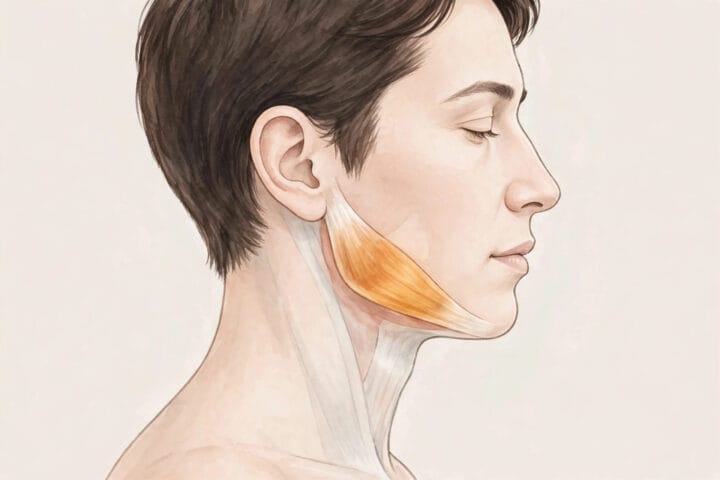
A quick note on terms: TMJ is the temporomandibular joint, the hinge in front of each ear. TMD means temporomandibular disorder, the umbrella term for problems with the joint, the chewing muscles, or both. Bruxism is teeth grinding or clenching, usually during sleep. Splints and guards sit exactly at that overlap — jaw pain and tooth wear.
1. Why the Names Overlap — and Why They Mislead
The U.S. National Institute of Dental and Craniofacial Research (NIDCR) lists the names used for one family of devices — intraoral appliances — as “nightguards, splints, stabilization appliances, occlusal splints, interocclusal splints, or bruxism splints.” In other words, the vocabulary treats splint and night guard as two labels for the same category — and the same device can be a “splint” in the treatment plan and a “night guard” on the invoice.
So the useful question is not which name a device carries but which job it was built and fitted to do. Three things genuinely differ: the purpose behind it (treating jaw pain, protecting teeth, or both), its design (material, coverage), and the supervision behind it (custom-made and adjusted, or fitted in your kitchen). Our earlier article asked another question — whether a TMJ dental splint is really the answer for jaw pain. This one is the comparison.
2. The Stabilization Splint: Built to Treat
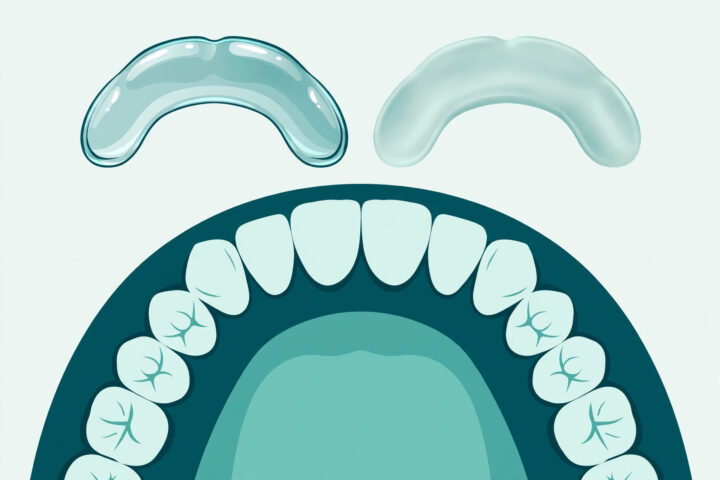
The stabilization splint — also called a flat-plane or Michigan-type splint — is the appliance dentists mean when they prescribe splint therapy for TMD. It is custom-made for one jaw from impressions or a digital scan. The material is hard acrylic resin, rigid rather than flexible, and it covers all the teeth in that arch: full coverage. Its biting surface is ground flat and smooth, so when you close, the opposing teeth meet it evenly, all at once, instead of landing on the slopes and high spots of natural teeth.
That flat, even contact is the treatment idea. It gives the jaw a stable platform, removes the tooth-guided slides that keep chewing muscles working, and spreads closing forces across the arch. A stabilization splint is also not finished when it leaves the lab: the dentist adjusts it at the fitting appointment and reviews it at follow-up visits, because the bite relationship it creates is the therapy. It is typically worn at night, when clenching does its damage — and which type suits you is, as Leeds Teaching Hospitals’ NHS guidance frames it, a decision to make with your dentist.

3. The Custom Night Guard: Built to Protect
A custom night guard is also made by a dental lab from impressions or a scan, and can look identical to a stabilization splint. The difference is the prescription. A night guard is usually ordered for one primary job: protecting teeth — and crowns and fillings — from the wear, chipping, and cracking that sleep bruxism causes. In the NIDCR’s words, a mouth guard is used “to separate the teeth; this prevents tooth damage and may reduce muscle activity due to grinding and clenching.”
Because protection is the goal, custom guards come in more materials: hard acrylic like a splint, soft flexible material, or a dual-laminate design (soft inside, hard outside). Fit is checked by the dentist, but the fine adjustment of bite contacts that defines splint therapy is not necessarily part of the process. One limit applies to every guard in this article: a guard does not stop the grinding itself. The jaw muscles still clench; the appliance takes the damage instead of your enamel, and it may reduce muscle activity. The drivers of the clenching — stress, sleep quality, daytime habits — need their own attention.

4. Boil-and-Bite Guards: The Pharmacy Option
The third option needs no dentist at all. Over-the-counter guards are sold in pharmacies and online in generic sizes. The commonest type is boil-and-bite: you soften the thermoplastic in hot water, bite into it, and it molds to your teeth as it cools. The material is thicker and bulkier than a lab-made guard, and the fit is approximate: thickness varies, edges are trimmed with scissors, and no one has checked how your teeth meet on it.
What an OTC guard does well is basic separation: a layer of plastic between upper and lower teeth, at the lowest cost of the three, with no appointments. The fit cannot be adjusted precisely, the material wears through faster than lab acrylic, and no professional is in the loop to ask the prior question — why are you grinding, and whether jaw pain, tooth wear, or a sleep problem is what needs attention? It can be a sensible short-term experiment in tooth protection, but it is not a TMD treatment — and persistent jaw pain deserves an assessment, not a thicker guard.
5. Side by Side: The Three Compared
The table below summarises the comparison — the real dividing lines are purpose, adjustment, and supervision.
| Stabilization splint | Custom night guard | OTC boil-and-bite guard | |
|---|---|---|---|
| Main purpose | Treatment for TMD muscle and joint pain; tooth protection secondary | Protecting teeth and dental work from bruxism wear and chipping | Basic tooth separation and protection on a budget |
| Material | Hard acrylic resin, rigid, flat biting surface | Hard acrylic, soft, or dual-laminate (soft inside, hard outside) | Thermoplastic, softened in hot water; thick, imprecise |
| Fit & coverage | Custom-made from impressions or a scan; full arch coverage; adjusted by the dentist at fitting and follow-up visits | Custom-made from impressions or a scan; usually full coverage; fit checked, contacts not necessarily tuned | Generic sizes, molded at home; approximate fit; no professional adjustment or review |
| Typical cost | Highest — lab fabrication plus fitting and adjustment visits; varies widely by region and insurance | More than OTC, generally less than splint therapy; varies by material, region, and insurance | Lowest cost — a pharmacy or online purchase with no appointments |
| Evidence | Most-studied design; Cochrane: possible small benefit for muscle pain when chewing vs no treatment, very uncertain overall | Tooth protection is the accepted role (NIDCR); evidence for TMD pain relief is limited | No meaningful trial evidence as a TMD treatment; not designed or tested for that role |
| Main risks | Low when full-coverage and reviewed; risk rises if worn for years unreviewed or it changes the bite | Soft versions can invite extra clenching in some and wear through; unreviewed wear can mask a worsening problem | Poor or uneven fit, faster wear, and no diagnosis behind it; jaw pain can go unassessed |
6. What the Evidence Says — and the Risks That Matter
Because the stabilization splint doubles as the most-prescribed TMD appliance, it is also the most studied — and the honest summary is “modest and unsettled.” The Cochrane review of occlusal interventions for TMD, published in 2024 and covering 57 randomised trials with 2,846 participants, found most studies evaluated the full hard stabilization splint. Its verdict: a hard stabilization splint may reduce muscle pain when chewing compared with no treatment, but the certainty of the evidence was very low for every comparison, and the authors concluded the evidence is insufficient to reach conclusions about effectiveness. The NIDCR strikes the same note: there is not a lot of evidence on whether appliances improve TMD pain. None of that makes a splint pointless — tooth protection is a clearer, more mechanical benefit, and a reversible appliance remains a reasonable part of conservative care — but “splint” and “proven treatment” are not synonyms. An appliance also sits inside a wider conservative programme of education, jaw rest, habit change, and physical therapy, alongside which options such as Botox for TMJ are considered for persistent muscle-driven pain.
The risks follow from fit and coverage — and from absent supervision. An appliance that covers only some teeth — a partial-coverage design — can let the uncovered teeth shift over months of wear, changing how the bite meets; soft appliances carry their own version: some people clench harder into a chewy surface, and soft material wears through sooner. The NIDCR’s guardrails are worth following with any of the three: an appliance should not be designed to permanently change your bite, and if it causes pain, stop using it and consult your dentist or doctor. The same caution applies to symptoms no guard is meant to treat — ear fullness and dizziness are reported alongside TMD, but as our article on whether TMJ can cause dizziness explains, they need their own assessment, not a thicker piece of plastic.
Frequently Asked Questions
Is a night guard the same as a TMJ splint?
Often, yes — the names overlap. The NIDCR lists nightguards and splints among the interchangeable names for intraoral appliances, and one device may be called both. The real differences are purpose, design, and follow-up: a stabilization splint is custom-made in hard acrylic and adjusted as TMD treatment, while a night guard is usually prescribed mainly to protect teeth from grinding wear.
Can I just buy a boil-and-bite guard instead of a custom splint?
For short-term tooth protection, an over-the-counter guard is a reasonable low-cost trial: it separates the teeth at night. But its fit is approximate, it cannot be adjusted precisely, the material wears faster, and nobody has assessed why you grind. If jaw pain — rather than tooth wear — is your main problem, a dental assessment matters more than the guard itself.
Will a night guard stop me grinding my teeth?
No. A guard does not switch off clenching or grinding; the jaw muscles keep working, and the appliance takes the wear instead of your enamel. The NIDCR notes a guard separates the teeth, prevents tooth damage, and may reduce muscle activity. Reducing the grinding itself means addressing its drivers: stress, sleep quality, daytime clenching habits.
Can a splint or guard change my bite?
A properly fitted full-coverage appliance, reviewed by your dentist, is designed not to — the NIDCR is explicit that an appliance should not permanently change your bite. The risk rises with partial-coverage designs worn long-term, which can let uncovered teeth shift, and with any appliance worn for years unreviewed. If your bite starts to feel different, or the appliance causes pain, stop using it and see your dentist.
Conclusion
Splint and night guard are best understood as overlapping names, not rival products. Underneath the labels sit three genuinely different things: a hard-acrylic stabilization splint, custom-made and adjusted as a treatment for TMD pain; a custom night guard, made mainly to protect teeth from bruxism; and a boil-and-bite guard, a cheap, approximate layer of protection with no supervision behind it. The evidence supports the protective job more firmly than the pain-relief job — Cochrane found the trial evidence for splints in TMD pain very uncertain — so the sensible choice depends on which problem you have: worn or chipping teeth, muscle and joint pain, or both. That judgement is part of the wider conservative-first approach set out in what everyone needs to know about TMJ: start reversible, review what you use, and let a proper assessment — not a product name — decide the appliance.
This article is for educational purposes only and is not medical advice. It is general information, not a diagnosis or a recommendation for any individual. Discuss jaw pain, grinding, tooth wear, or bite changes with your own dentist or clinician, and stop using any appliance that causes pain until it has been checked.
Sources
- National Institute of Dental and Craniofacial Research (NIDCR) — Temporomandibular Disorders (TMD): intraoral appliances and their names; an appliance should not permanently change the bite, and should be stopped if it causes pain — nidcr.nih.gov/health-info/tmj
- National Institute of Dental and Craniofacial Research (NIDCR) — Bruxism: mouth guards separate the teeth, prevent tooth damage, and may reduce muscle activity from grinding and clenching — nidcr.nih.gov/health-info/bruxism
- Occlusal interventions for managing temporomandibular disorders, Cochrane Database of Systematic Reviews, 2024 (57 randomised trials, 2,846 participants, mostly full hard stabilization splints; very low certainty, conclusions insufficient) — cochrane.org/evidence/CD012850
- Leeds Teaching Hospitals NHS Trust — Temporomandibular disorders (TMD) patient resource (reviewed May 2026): splints as plastic devices worn over the teeth at night, the type chosen with your dental team — leedsth.nhs.uk/patients/resources/temporomandibular-disorders-tmd
About this information
Consult the sources listed in the article. This notice does not certify an individual clinical review.
This article is for education only and is not medical advice. Talk to a qualified clinician about your own symptoms.


0 Comments
Trackbacks/Pingbacks