TMJ and Botox: What the Evidence Actually Says in 2026
If you clench or grind your teeth, you have probably heard someone suggest Botox for TMJ. It sounds simple: a few injections into the chewing muscles, less clenching, less pain. The reality is more mixed. Botulinum toxin type A can reduce jaw muscle activity for a few months, and several systematic reviews find it helps some people with muscle-related jaw pain and bruxism. But it is not approved by the U.S. Food and Drug Administration (FDA) for temporomandibular disorders (TMD) or bruxism, the evidence does not support using it as a first-line treatment, and it does nothing for the joint itself. This article walks through what the research actually shows, who it may suit, and what to ask before deciding.
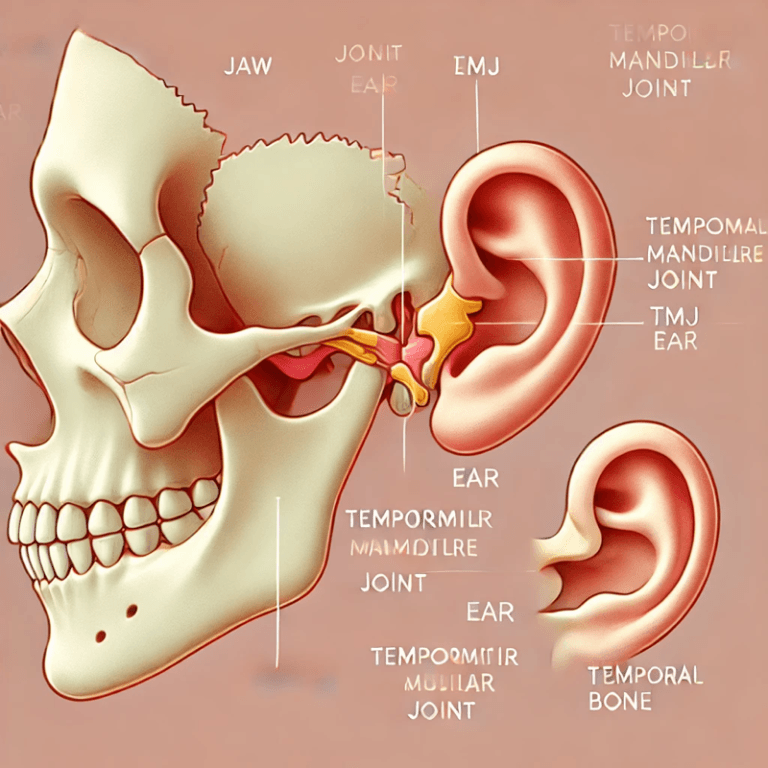
A quick note on terms: TMJ is the temporomandibular joint, the hinge in front of each ear. TMD means temporomandibular disorder, an umbrella term for problems involving the joint, the chewing muscles, the disc, the bite, or how the brain processes pain — or a combination of these. Botox is a brand name for onabotulinumtoxinA; other botulinum toxin type A products include Dysport (abobotulinumtoxinA) and Xeomin (incobotulinumtoxinA). Their units are not interchangeable, so a dose quoted for one product does not translate directly to another.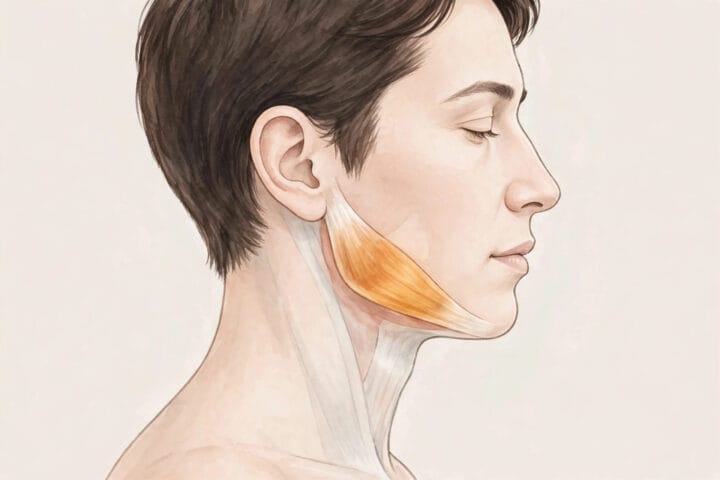
1. How Botox Works on Jaw Muscles
Botulinum toxin type A blocks the release of acetylcholine, the chemical signal that tells a muscle to contract. Injected into the masseter — the large chewing muscle at the angle of the jaw — and sometimes the temporalis muscle at the temple, it temporarily weakens those muscles. Weaker jaw muscles generate less clenching force, less sustained tension in the face and temples, and less compressive force on the joint. That reduction in muscle force is the whole therapeutic mechanism: it does not repair a damaged disc, rebuild cartilage, fix tooth wear, or treat the stress, sleep disruption, or neurological drivers that keep bruxism going.
Because the effect is on muscle activity, it makes the most sense when the main problem is overactive jaw muscles — myogenous TMD, or muscle-related jaw pain — rather than a structural joint problem such as disc displacement or osteoarthritis. Distinguishing muscle pain, joint pain, and bruxism before deciding matters, because the treatment targets only the first of these.
2. What the Evidence Actually Shows
The evidence base is moderate, not strong, and the most recent reviews agree on the shape of it: possible benefit for selected patients with muscle-driven symptoms, not a routine first treatment.
A 2024 systematic review in the Balkan Journal of Dental Medicine looked at 47 clinical studies from 2000 to 2024 of botulinum toxin for TMD, myofascial pain, and bruxism. Injections mostly targeted the masseter and temporalis muscles, at doses ranging from 10 to 75 international units (IU) per muscle. Across the included studies, the review reported significant pain reduction — up to 91% in individual studies — improved jaw mobility, and bruxism episodes reduced by up to 87%, often with improved sleep quality. Symptom improvement was reported over months of follow-up in that review. Adverse effects were generally mild, with transient muscle atrophy resolving within three months. The authors also flagged substantial heterogeneity between studies — different patient groups, protocols, and outcome measures — which limited direct comparisons.
A newer systematic review of randomized controlled trials, published in Toxins in 2026, included 15 trials with 797 participants published between 2020 and 2025. It found potential benefits of botulinum toxin type A particularly in patients with localized myofascial pain, myogenous TMD, or marked masticatory muscle hyperactivity. But its conclusion was careful: current evidence does not support routine use as a first-line treatment for TMD overall. Instead, it may be an adjunctive or second-line option for selected patients who have not responded adequately to conventional noninvasive treatment. Larger, more rigorous trials are still needed to pin down who benefits, at what dose, and for how long.
Not every pooled analysis agrees. A 2024 systematic review and meta-analysis in PLOS ONE (14 randomized trials, 395 patients) found botulinum toxin was not significantly better than placebo for pain reduction at 1, 3, or 6 months, and concluded more high-quality trials are needed. That contrast — individual reviews reporting pain relief, pooled placebo-controlled analyses finding no significant edge — is why the honest summary is “possible benefit in selected muscle-driven cases, not a proven first-line treatment.”
The U.S. National Institute of Dental and Craniofacial Research (NIDCR) takes a similarly cautious position, noting that studies of botulinum toxin for TMD have produced mixed results and that it remains unclear whether the treatment relieves symptoms. That is the honest state of the science in 2026: promising signals in muscle-driven cases, no settled verdict.
3. How Long It Lasts, and What a Typical Course Looks Like
The effect is temporary. A systematic review and meta-analysis comparing botulinum toxin type A with occlusal splint therapy for bruxism — six randomized trials, 323 participants — described onset in 1 to 2 weeks, peak effect after 4 to 6 weeks, and benefit decreasing after 3 to 6 months. Other clinical reviews describe a similar window: benefits appearing within 2 to 4 weeks, peaking around 6 to 8 weeks, and lasting roughly 3 to 4 months before diminishing. There is no approved dosing table for bruxism or TMD. Clinical reviews commonly cite a starting dose of around 20 to 30 units of onabotulinumtoxinA per masseter for an average adult, with higher doses for larger muscles, but dosing varies widely between clinicians and products, and total doses in the trials ranged from 45 to 500 IU across both masseter and temporalis muscles.
That temporary window has a practical consequence: people who find it helpful usually need repeat injections every few months, indefinitely, unless the underlying drivers of clenching are also addressed. Repeat treatment should follow a fresh assessment each time, not an automatic calendar reminder, and the decision to continue should weigh whether the benefit is still there against the cost and the cumulative effects discussed below.
4. Risks and Side Effects Worth Knowing
Most reported side effects are mild and short-lived: soreness at the injection site, temporary muscle weakness, and chewing fatigue or difficulty with hard foods if the dose weakens the muscles more than intended. The 2024 review noted transient muscle atrophy that resolved within about three months.
There are real risks to weigh. The FDA prescribing information carries a boxed warning that botulinum toxin effects can spread beyond the injection site, in rare cases causing serious swallowing or breathing problems, hours to weeks after injection. If toxin spreads to nearby facial muscles it can cause smile asymmetry or changes in facial expression. Repeated weakening of the chewing muscles may affect muscle size and possibly bone loading around the jaw — an area where research is still evolving, with no settled answer on long-term bone effects. Reducing masseter activity can also slim the lower face, which some people welcome and others do not; a wide jaw can also reflect bone structure or fat, which a muscle injection cannot change.
Botox is not appropriate for everyone. People who are pregnant or breastfeeding, who have certain neuromuscular disorders, swallowing or breathing problems, infection at the injection site, or who take medicines that affect neuromuscular transmission — including some antibiotics such as aminoglycosides — may not be good candidates. A clinician should review medications and medical history first.
5. How It Compares With Splints and Other First-Line Options
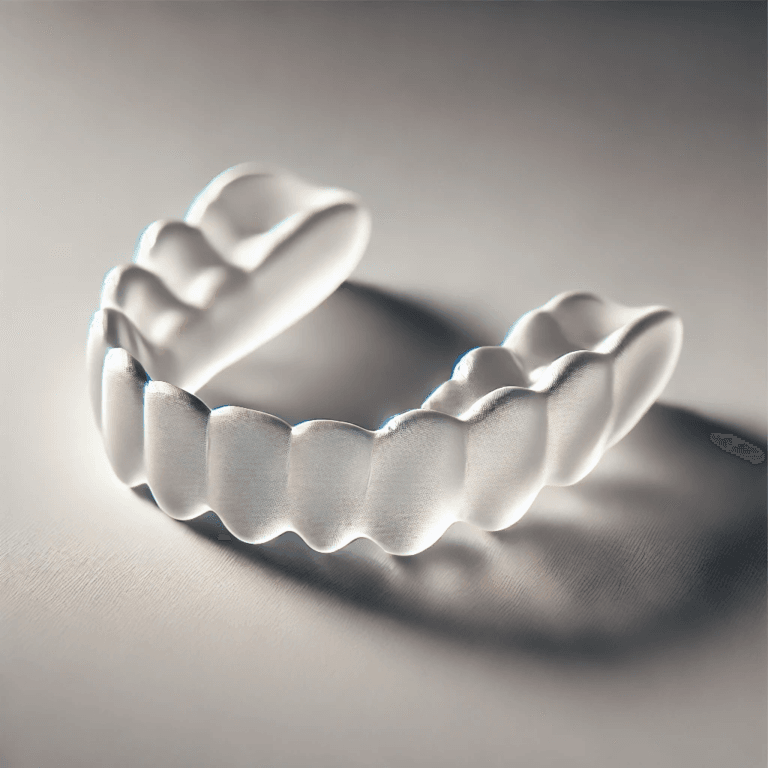
Standard care for TMD starts with reversible, noninvasive measures: education, jaw rest and habit change, physical therapy, heat or cold, stress management, and an occlusal splint or night guard. These are the treatments guidelines favor first, and they are also what the evidence reviews use as the comparison group.
In the six-trial comparison with occlusal splints, both approaches reduced symptoms; the review found botulinum toxin effective for symptom relief, though evidence for reducing bruxism activity itself remained limited. A splint protects the teeth from grinding damage, which Botox does not do — weakening the muscle reduces force, but the teeth can still meet and wear. And a splint is a one-time device, while Botox is a repeating treatment with a repeating cost: one patient-facing guide cites roughly $500 to $1,500 per session, varying widely with units used and provider, and insurance often does not cover off-label use. That cost and commitment is a genuine part of the decision, not an afterthought.
| Botox (botulinum toxin type A) | Occlusal splint / night guard | |
|---|---|---|
| What it does | Weakens the chewing muscles, reducing clenching force and muscle pain | Protects the teeth from grinding damage and can ease symptoms |
| Protects teeth? | No — teeth can still meet and wear | Yes — that is its main job |
| How long it lasts | About 3–6 months; repeat injections needed | A one-time device, used nightly |
| Typical cost | Roughly $500–$1,500 per session; often not covered off-label | One-time cost of the device |
| Place in treatment | Second-line / adjunctive, for selected muscle-driven cases | First-line, alongside education, jaw rest, and physical therapy |
It is also worth naming what Botox does not do. It does not cure TMD, repair a damaged joint, rebuild worn teeth, heal a cracked tooth, treat infection, correct sleep apnea, permanently stop grinding, fix an unstable bite, or replace physical therapy or a proper diagnosis. For joint-structural TMD — disc displacement, osteoarthritis — relaxing the muscles may ease some pain, but it does not treat the joint problem.
6. Who It May Suit — and What to Ask First
Putting the reviews together, the people most likely to be offered Botox are those with muscle-driven jaw pain or severe clenching that has not improved with conservative treatment, where the main problem is overactive chewing muscles rather than the joint itself, and where the person understands the effect is temporary and repeat treatment is part of the deal. It is a poor fit as a first step, as a cure, or for joint-structural problems.
Questions worth asking a dentist or clinician before deciding include: Is my pain mainly muscle-driven or joint-driven, and how was that determined? What conservative treatments have I not yet tried? Which product and dose are you proposing, and why that dose? What should I expect in the first two weeks, and what would count as a good result? How will we decide whether to repeat it, and how often? What are the costs, and will insurance cover off-label use? And what is the plan for protecting my teeth and addressing the drivers of clenching — stress, sleep, daytime habits — alongside the injections?
Frequently Asked Questions
Is Botox FDA-approved for TMJ or bruxism?
No. The FDA-approved labeling for BOTOX covers uses such as specific facial lines and certain medical conditions, but not TMJ disorders, jaw pain, teeth grinding, or masseter reduction. Using it for TMD or bruxism is off-label, which means a clinician may prescribe it when they judge it medically appropriate, but the FDA has not evaluated that specific use as safe and effective.
How long does Botox for jaw clenching last?
Effects typically begin within 1 to 2 weeks, peak around 4 to 8 weeks, and fade after about 3 to 6 months, based on the trial literature. Individual responses vary, and symptoms can return as muscle activity recovers. Repeat injections are usually needed every few months if the treatment is continued.
Does Botox stop grinding and protect my teeth?
Not reliably, and not in the way a splint does. It reduces the force of clenching, which may reduce pain and bruxism episodes, but evidence for reducing bruxism activity itself is limited, and it does not physically shield the teeth from wear. A night guard or splint is still the usual way to protect teeth.
Will Botox change the shape of my face?
It can. Reducing masseter activity often reduces the size of an enlarged masseter, which can slim the lower face. That change is temporary and varies between people, and uneven dosing can cause asymmetry. Bone structure and fat are not changed by a muscle injection.
Conclusion
Botox for TMJ and bruxism sits in an in-between place: real signals of benefit for muscle-driven jaw pain and clenching, in reviews covering dozens of studies and hundreds of trial participants, but no FDA approval for these uses, no agreed dose, and no support for using it before the conservative treatments that guidelines recommend first. For a person with persistent muscle-related jaw pain who has tried splints, physical therapy, and habit change without enough relief, it may be a reasonable second-line option to discuss with a clinician — with eyes open about the temporary effect, the repeat cost, and the risks. For joint problems, or as a first step, or as a promised cure, the evidence does not back it. The most useful next step is a proper assessment of whether the pain is muscle-driven, and a conversation about what success would look like before the first injection.
This article is for educational purposes only and is not medical advice. It is general information about a treatment option, not a diagnosis or a recommendation for any individual. Discuss jaw pain, clenching, or any treatment decision with your own dentist or clinician, especially if you are pregnant, have a neuromuscular condition, or take medicines that affect muscle function.
Sources
- Botulinum toxin A as a treatment for temporomandibular disorders: a systematic review (47 clinical studies, 2000–2024), Balkan Journal of Dental Medicine, 2024 — ouci.dntb.gov.ua
- Clinical and functional effectiveness of botulinum toxin in temporomandibular disorders: a systematic review of randomized controlled trials (15 RCTs, 797 participants, 2020–2025), Toxins, 2026 — mdpi-res.com (PDF)
- Clinical efficacy and safety of botulinum toxin type A compared with occlusal splint therapy in the management of bruxism: a systematic review and meta-analysis (6 RCTs, 323 participants) — farmclin.com
- The effectiveness of botulinum toxin for temporomandibular disorders: a systematic review and meta-analysis (14 RCTs, 395 patients), PLOS ONE, 2024 — journals.plos.org
- Botulinum toxin type A for myogenous temporomandibular disorders, focusing on duration of clinical effects and dosage parameters: a systematic review (10 RCTs, effects generally 8–24 weeks), Head & Face Medicine, 2026 — link.springer.com