Educational information · Not medical advice
In brief
Medication-overuse headache happens when pain relief is used too often — 10 or 15 days a month, depending on the drug. Thresholds, withdrawal, and prevention.
In this article
If you treat headaches often, medication-overuse headache is the trap hidden inside the treatment. The pattern is painfully familiar: a headache starts, you take something that helps, it works — so next time you take it a little earlier, and a little more often. Weeks later the headaches are no longer occasional. They are there most days, duller and harder to shift, and the medicine that used to clear them now seems to hold them off for only a few hours. Medication-overuse headache, sometimes called rebound headache, is what clinicians call this cycle, and it is defined not by how much medicine you take in a single dose, but by how many days a month you take it.
A quick note on terms: acute (or symptomatic) medicines are the ones taken to stop an attack that has already started — painkillers such as acetaminophen (paracetamol) and ibuprofen, migraine-specific triptans, combination products that add caffeine or codeine, and others. Preventive medicines are different: they are taken on a schedule to reduce how often attacks happen in the first place. Medication-overuse headache is a problem of the acute medicines, and it develops on top of a headache disorder you already have, most often migraine or tension-type headache.
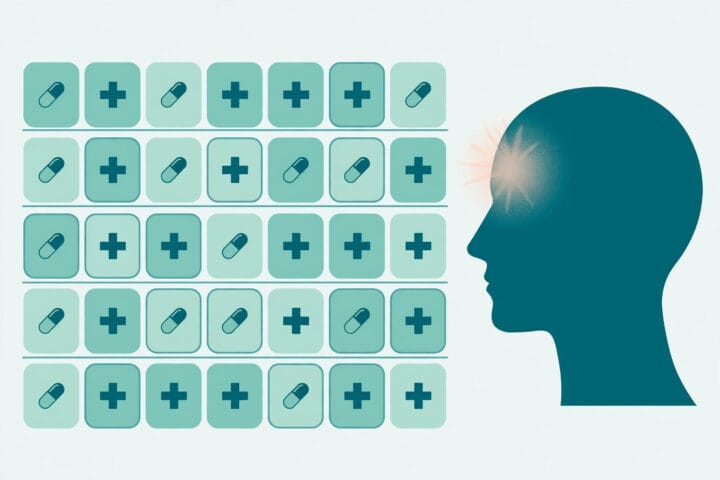
1. What Medication-Overuse Headache Actually Is
The International Classification of Headache Disorders, third edition (ICHD-3, published by the International Headache Society in 2018), defines medication-overuse headache as headache occurring on 15 or more days per month in a person with a pre-existing headache disorder, developing as a consequence of regular overuse of one or more acute headache medicines for more than 3 months. It usually — but not always — resolves after the overused medicine is stopped.
Two parts of that definition matter more than people expect. First, the count is in days, not doses or tablets. Taking one dose on 16 different days counts more, for this diagnosis, than taking several doses on each of 6 days. Second, the thresholds in the criteria are described in ICHD-3 itself as based on expert opinion rather than formal evidence — they are practical guardrails, not exact biological cliff edges. Being just under a threshold does not guarantee you are safe, and being just over it does not prove the medicine is the whole problem.
It is also not rare or a personal failure. A 2021 review in the Journal of Neurology put its prevalence at approximately 1% of the population and counted it among the leading causes of disability worldwide — largely because it converts a manageable, episodic headache problem into a near-daily one.

2. The Thresholds: How Many Days a Month Is Too Many?
ICHD-3 sets different overuse thresholds by drug class, because some medicines drive the cycle faster than others:
| Medicine class | Overuse threshold (regular use for >3 months) |
|---|---|
| Simple analgesics — acetaminophen (paracetamol), aspirin, other NSAIDs such as ibuprofen | 15 or more days per month |
| Triptans (any formulation) | 10 or more days per month |
| Ergotamines | 10 or more days per month |
| Opioids | 10 or more days per month |
| Combination analgesics (for example, products combining a painkiller with caffeine or codeine) | 10 or more days per month |
| Several classes combined, none over its own limit | 10 or more days per month in total |
That last row catches many people out. You do not have to overuse one single product. Alternating between a triptan, an over-the-counter painkiller, and a caffeine combination — each on what feels like a modest number of days — can still add up to overuse in total. This is also why a simple headache diary matters: most people underestimate their treatment days until they count them. If you want a practical rule to discuss with your clinician, it is the mirror image of the table — keep triptans, opioids, and combination products under 10 days a month, and simple painkillers under 15.
A hand crossing off days on a paper calendar — tracking how many days a month pain relief is taken
3. Why More Relief Can Mean More Headache
The exact mechanism is not fully settled, and honest sources say so. What reviews describe is a sensitization story: with very frequent acute treatment, the pain system appears to become more reactive rather than less — attacks are triggered more easily, the threshold for the next headache drops, and an episodic pattern gradually transforms into a chronic, near-daily one. The 2021 Journal of Neurology review notes that the frequency of acute medication use seems more important in developing medication-overuse headache than the cumulative dose taken, which fits the days-not-doses pattern in the criteria.
Behavior reinforces biology. When a medicine works, taking it at the first twinge — or even in anticipation, before a meeting or a flight — is understandable. But anticipatory use is exactly how treatment days creep from 6 a month to 12, and then past the threshold, without any single decision feeling unreasonable. Fear of the next attack is part of the disorder, not a lack of willpower, and it is one reason clinicians treat the pattern rather than simply telling patients to try harder.
Medication overuse also blunts prevention. A preventive plan that might work well for episodic migraine often disappoints while overuse continues, which is why the order of treatment — address the overuse, then judge prevention fairly — matters. Our overview of how migraine works in the brain explains the sensitization side of that picture in more depth.
4. How It Is Recognized — and What Else It Can Look Like
There is no blood test or scan for medication-overuse headache. Recognition is a history exercise: headache on 15 or more days a month, a pre-existing headache disorder, and a treatment pattern over a threshold for more than 3 months, with no other diagnosis explaining it better. A 2–3 month diary of headache days and treatment days is usually the single most useful piece of evidence you can bring to an appointment.
The same near-daily pattern can have other causes, which is why a clinician, not a checklist, makes this call. Chronic migraine (headache on 15 or more days a month, with migraine features on at least 8 of them) overlaps heavily and can coexist with medication overuse. Tension-type headache, sleep apnea, thyroid problems, and — importantly — secondary headaches with red flags (a sudden worst-ever headache, new headache after age 50, headache with fever, weakness, vision loss, or a pattern that is rapidly worsening) need a different workup entirely. If any red flag is present, the priority is urgent assessment, not a medication diary.
Jaw pain belongs in this conversation too. Temporomandibular disorders frequently travel with migraine and frequent headache, and treating every flare as a headache to be medicated can add treatment days without addressing the jaw component. If jaw pain, clicking, or morning clenching are part of your pattern, that is worth raising alongside the headache history — our article on Botox for TMJ and what the evidence actually says is one example of how differently a jaw-driven problem is approached.
5. Breaking the Cycle: Withdrawal, Then Prevention
Treatment, as described in clinical guidance, has three broad steps: explain the pattern so the cycle makes sense, withdraw the overused medicine, and put prevention — pharmacological and behavioral — in place so the attacks that remain are fewer and the pressure to over-treat falls.
Stopping the overused medicine
How a medicine is stopped depends on what it is. Guidance summarized from NICE-based sources notes that simple analgesics and triptans can generally be stopped abruptly, while medicines such as opioids — and sedating combination products — usually need a gradual taper, because abrupt withdrawal can be unsafe as well as miserable. This is a decision to make with your clinician, not from an article. Withdrawal itself often brings a temporary worsening — headaches, nausea, and restlessness for days before things improve — and people who expect that dip are far more likely to get through it than people who interpret it as proof they cannot stop.
Prevention and limits afterwards
Once overuse is addressed, the underlying headache disorder is treated on its merits: preventive options where attacks are frequent, and acute treatment reintroduced with explicit day limits — under 10 days a month for triptans, opioids, and combinations, under 15 for simple painkillers. For migraine specifically, the range of acute and preventive options has widened considerably in recent years; our guide to migraine medicines, from triptans to CGRP treatments, walks through that landscape. The point of the limits is not rationing relief — it is keeping relief working, by keeping you out of the cycle that made it stop working.
Relapse is common enough that follow-up is part of the treatment, not an afterthought. Keeping the diary going after withdrawal, and reviewing treatment days at each appointment, is how a slide back toward daily use gets caught at 11 days a month instead of 20.
Frequently Asked Questions
What is medication-overuse headache?
It is a secondary headache disorder in which acute headache medicine, used too many days per month for more than 3 months, makes headaches more frequent. Under ICHD-3, it means headache on 15 or more days a month in someone with a pre-existing headache disorder, alongside overuse of an acute medicine. It usually, but not always, resolves once the overuse stops.
How many days a month can I safely take painkillers for headache?
The ICHD-3 overuse thresholds are the practical guide: 15 or more days a month for simple painkillers such as acetaminophen or NSAIDs, and 10 or more days a month for triptans, opioids, ergotamines, and combination products counts as overuse when sustained over 3 months. Staying under those limits — and counting treatment days honestly — is the standard advice to discuss with your clinician.
Can I just stop my headache medicine suddenly?
For simple painkillers and triptans, abrupt stopping is the usual approach in clinical guidance. For opioids and sedating combination products, a gradual taper is generally advised, and stopping suddenly can be unsafe. Which route fits you depends on what you take and how much, so plan the withdrawal with a clinician rather than doing it alone.
Will my headaches go back to normal after I stop?
Many people improve substantially in the weeks after withdrawal, and an episodic pattern often returns — but ICHD-3 itself notes resolution is usual, not guaranteed. If near-daily headache persists after overuse is addressed, the underlying disorder needs its own preventive plan, and persistent or changing headache always deserves reassessment for other causes.
Conclusion
Medication-overuse headache is not caused by taking a strong medicine, or by taking one dose too many. It is caused by frequency — treatment days quietly adding up past 10 or 15 a month, depending on the drug, until the treatment is sustaining the problem it was meant to solve. The encouraging part is that the pattern is recognizable from a simple diary, the thresholds are clear, and for many people the cycle can be broken with a planned withdrawal and a proper preventive strategy.
If your headache days and treatment days have both been climbing, count them for a month and take that count to a clinician. It is a short conversation that can change the whole direction of treatment — and it starts with days, not doses.
Sources
- International Headache Society. The International Classification of Headache Disorders, 3rd edition (ICHD-3), 2018 — section 8.2, Medication-overuse headache: diagnostic criteria and drug-class thresholds.
- Medication-overuse headache: causes, consequences and management. Journal of Neurology, 2021 — prevalence (~1%), the definition, and why frequency of use matters more than cumulative dose.
- NHS / NICE Clinical Knowledge Summary guidance on medication-overuse headache (summarized at NHS Dumfries & Galloway Right Decisions) — thresholds, and abrupt vs. gradual withdrawal by drug class.
Disclaimer: This article is educational information only and is not medical advice. It does not diagnose any condition or recommend a specific treatment for you. If you have frequent headaches, are considering stopping a prescribed medicine, or have any headache red flags — a sudden severe headache, new headache later in life, or headache with fever, weakness, or vision changes — seek medical care promptly and discuss your situation with a qualified clinician.
About this information
Consult the sources listed in the article. This notice does not certify an individual clinical review.
This article is for education only and is not medical advice. Talk to a qualified clinician about your own symptoms.


0 Comments
Trackbacks/Pingbacks