
Educational information · Not medical advice
In brief
Jaw pain after dental work? Learn how long a TMJ flare up after dental work lasts, what helps at home, and when to call your dentist for a bite check.
In this article
- Why does your jaw hurt after dental work?
- How long does a tmj flare up after dental work last?
- Does the procedure change the timeline?
- What helps a jaw flare settle at home?
- When does your bite need checking?
- When should you call your dentist — or get urgent care?
- Frequently asked questions
- Conclusion
- Sources
Key Takeaways
- A tmj flare up after dental work is usually strained chewing muscles or an irritated jaw joint from holding your mouth open — not damage to the joint itself.
- Most mild flares ease over a few days and keep improving over one to two weeks; pain that worsens instead of improving needs a call.
- A filling or crown that feels high, hitting first when you close, is a separate problem — it needs a bite check, not just rest.
- Swelling, fever, pus, a bad taste, or trouble opening, swallowing, or breathing are not a simple flare. Get urgent dental or emergency care.
You went in for a filling, a crown, a cleaning, or a root canal — and came home with an aching jaw that was not the problem you went in with. A tmj flare up after dental work is common, and it is usually the muscles and joint complaining about the appointment itself: holding your mouth wide open, sometimes for a long time, while someone works at the back of your mouth. This article explains how long that flare should last, what helps it settle, and — just as important — the signs that your pain is not a flare at all, but a bite problem, a tooth problem, or an infection that needs care.
A quick note on terms: TMJ is the temporomandibular joint, the hinge in front of each ear. TMD means temporomandibular disorder, the group of more than 30 conditions affecting the jaw joint and its muscles, as the U.S. National Institute of Dental and Craniofacial Research (NIDCR) defines them.
Why does your jaw hurt after dental work?
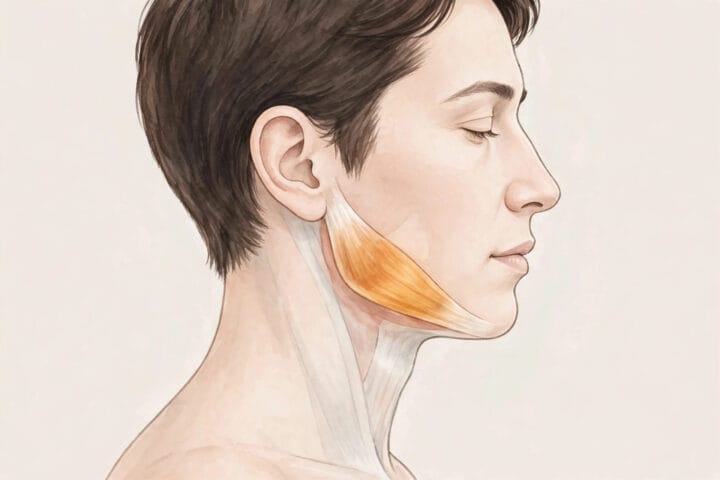
The simplest cause is load. During a longer appointment your mouth stays open wider, and for longer, than it normally does. The chewing muscles — the masseter on your cheek and the temporalis at your temple — hold a sustained stretch. Afterwards they can feel like any strained muscle: sore, tired, stiff, and reluctant to open fully. If you already clench or grind, that tissue may react more strongly.
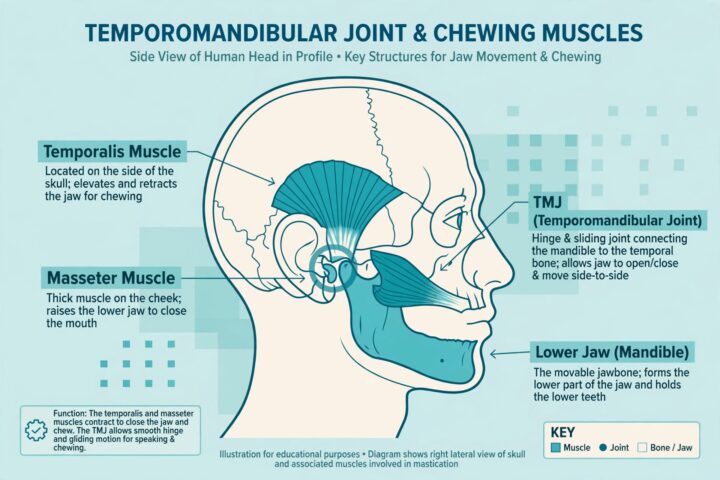
Other causes matter because they are treated differently. An injection for a lower tooth can irritate muscles inside the jaw and limit opening for a few days. A new filling or crown can change how your teeth meet. And sometimes the pain is the treated tooth or an infection in it, not the jaw at all. The NIDCR is clear that jaw or face pain may or may not be related to a TMD, and other conditions may need to be ruled out first.
If your main problem is ongoing jaw pain rather than a post-appointment flare, our article on when TMJ pain becomes chronic covers that different pattern.
How long does a tmj flare up after dental work last?
For a mild muscle flare, expect soreness to be most noticeable in the first few days, then steadily improve. Many people feel clearly better within a week, and a flare after a long appointment commonly settles over one to two weeks as the muscles recover. The direction matters more than the exact day: each day should be a little easier than the one before — opening a little wider, chewing a little more comfortably.
The improvement test: a simple flare gets better day by day. Pain that is worse on day four than on day one, opening that is shrinking instead of growing, or new swelling appearing after the first two days does not fit a simple flare — call your dentist rather than waiting it out.
There is no honest single number for everyone. The NIDCR notes that many TMDs last only a short time and go away on their own, while some become longer-lasting. Use the one-to-two-week window as a guide for a mild, improving flare — not as a promise, and not as a reason to sit on worsening symptoms.
Does the procedure change the timeline?
Usually, yes — the procedures load the jaw differently, and some carry their own healing timeline.
Filling. A filling is often a shorter appointment, so a muscle flare is often milder and shorter. The more common filling question is the bite: if one tooth feels high and hits first, read the bite-check section below.
Crown. Crown appointments are longer, so muscle soreness is often greater, and a new crown is also the restoration most likely to need a small bite adjustment once numbness wears off.
Cleaning. A routine cleaning is the lightest load, so jaw soreness afterwards is usually brief. Marked pain after a simple cleaning deserves a call, especially if it localises to one tooth or comes with swelling.
Root canal. A root canal combines a long appointment with a tooth that was already inflamed. Tenderness when biting on that tooth can be part of its own recovery, separate from jaw-muscle soreness. If that biting pain worsens or swelling develops, call about the tooth, not the jaw.

What helps a jaw flare settle at home?
The NIDCR’s advice for jaw joint and muscle discomfort is deliberately simple and reversible: eat soft foods, apply heat or cold to the face, take over-the-counter pain medication such as an NSAID like ibuprofen when it is safe for you and used as directed, and reduce habits such as jaw clenching, gum chewing, or nail biting. Its summary is that many jaw problems are temporary and simple treatment may be all that is necessary — and that treatments that permanently change the bite should be avoided as a first response.
In practice: choose foods that need little chewing for a few days, cut food into small pieces, support your chin when you yawn, and keep your teeth apart at rest — lips together, teeth apart. Gentle movement within a comfortable range is reasonable; forcing the jaw open to test it is not. If daytime clenching is a wider pattern for you, our guide to anxiety, jaw clenching, and the stress–pain loop covers the habit side.
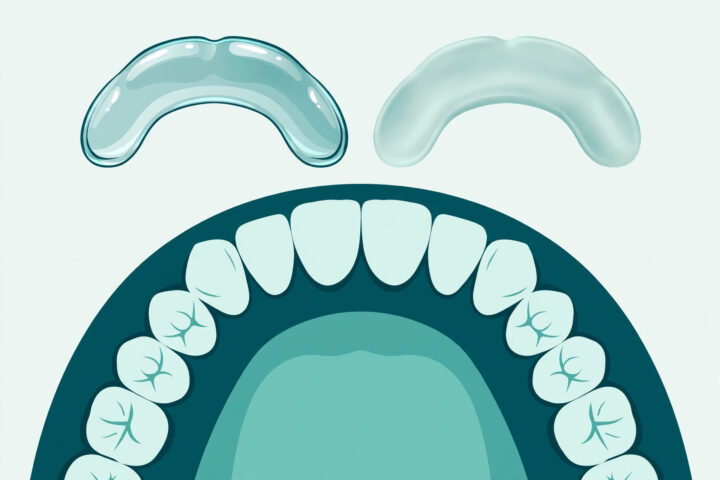
A night guard or splint is not a treatment for a fresh flare, and evidence for appliances improving TMD pain is limited. Our comparison of a TMJ splint vs. a night guard explains the difference.
When does your bite need checking?
Call for a bite check when the problem is specific: one new filling or crown feels high, your teeth do not meet evenly, that tooth hurts when you bite or tap them together, or you find yourself avoiding chewing on that side. While you are numb at the appointment, you cannot judge your bite accurately, so a high spot may only become obvious once feeling returns. A bite adjustment is a small, routine correction by your dentist — it is not the same thing as grinding down teeth to treat TMD, which the NIDCR warns against. The distinction is scope: adjusting a new restoration that demonstrably hits first is fixing that restoration; reshaping your whole bite to cure jaw pain is not supported.
Do not wait out a clearly high bite for weeks: every closure loads that one tooth first, which can keep a flare going. Tell the practice which tooth it is, whether it hits first, and whether biting on it hurts.
When should you call your dentist — or get urgent care?
Call your dentist promptly if pain is not improving after a few days, is still significant after a week, your opening stays limited, your bite feels wrong, or pain localises sharply to the treated tooth. Those patterns need an examination, not more time.
Get urgent dental care the same day if you develop swelling in the gum, jaw, cheek, or face, fever or feeling generally unwell, pus or a bad taste, red and swollen gums, or pain that spreads to the ear, jaw, or neck and is getting worse. NHS guidance describes a dental abscess as a build-up of pus in the teeth or gums that needs urgent treatment by a dentist and will not go away on its own. Seek emergency care if swelling makes it hard to breathe, swallow, or speak, or spreads into the neck or eye.
One more pattern deserves a prompt call: new numbness, tingling, or altered sensation that does not fade as the anaesthetic should. Tell the treating dentist the same day so it is assessed and recorded.
Frequently asked questions
Is jaw pain after a filling normal?
Mild jaw soreness after a filling is common, especially if your mouth was open for a while, and it should improve day by day over a few days. What is not a simple flare is a filling that feels high, pain when biting on that one tooth, or worsening pain — those need a bite check from your dentist.
How long should jaw pain last after a root canal?
Jaw-muscle soreness from a long root canal appointment usually eases over a few days and keeps improving over one to two weeks. Tenderness when biting on the treated tooth is separate and should also improve. Worsening biting pain, swelling, fever, or a bad taste means you should contact the treating dentist promptly.
Can a dental cleaning cause a TMJ flare?
Yes, it can, although a cleaning is a lighter and shorter load than a crown or root canal appointment, so soreness is usually brief. Holding your mouth open, especially if you already clench or have a sensitive jaw, can leave the muscles aching afterwards. Marked or worsening pain after a cleaning deserves a call.
Should I use heat or ice on my jaw after dental work?
Either can help, and the NIDCR lists applying heat or cold to the face among its simple first steps for jaw discomfort. Many people prefer cold early, when the area feels freshly irritated, and warmth later for stiff muscles. Use a barrier between a pack and your skin, and follow any aftercare instructions your dentist gave you.
Conclusion
A tmj flare up after dental work is usually tired, strained jaw muscles and an irritated joint after an appointment that asked a lot of them. Rest it, eat soft food, use heat or cold, and watch the direction — better each day, usually over days to one or two weeks. A tooth that hits first needs a bite check, pain that worsens needs an examination, and swelling, fever, or trouble opening, swallowing, or breathing needs urgent care. When in doubt, call the practice that treated you. If jaw pain keeps returning, our article on TMJ and Botox: what the evidence actually says is a careful next read.
This article is for educational purposes only and is not medical advice. It is general information, not a diagnosis or a recommendation for any individual. Discuss jaw pain, bite changes, swelling, or limited opening with your own dentist or clinician.
Sources
- National Institute of Dental and Craniofacial Research (NIDCR) — Temporomandibular Disorders (TMD): more than 30 conditions; many TMDs last a short time; conservative, reversible care first (soft foods, heat or cold, NSAIDs, reducing clenching); no standard diagnostic test; pain may not be TMD — nidcr.nih.gov/health-info/tmd
- National Institute of Dental and Craniofacial Research (NIDCR) — Less Is Often Best in Treating TMD: simple steps first; avoid treatments that permanently change the teeth and bite — nidcr.nih.gov/health-info/tmd
- NHS 111 Wales — Swelling (mouth and face) / dental abscess: intense throbbing pain, redness and swelling, fever, difficulty opening the mouth; abscesses are treated by removing the source of infection — 111.wales.nhs.uk
About this information
Consult the sources listed in the article. This notice does not certify an individual clinical review.
This article is for education only and is not medical advice. Talk to a qualified clinician about your own symptoms.
0 Comments