
Educational information · Not medical advice
In brief
Chronic TMJ pain can outlast the jaw problem that started it. Learn how central sensitization works, signs to watch, and what multidisciplinary care involves.
In this article
- When does jaw pain stop being acute and become chronic?
- What is central sensitization, in plain language?
- What are the signs your jaw pain has become chronic?
- Why does treating only the jaw sometimes stop working?
- What does multidisciplinary care for chronic TMJ pain look like?
- What can you do day to day while jaw pain is chronic?
- Frequently asked questions
- Conclusion
- Sources
Key Takeaways
- Chronic TMJ pain is pain that persists or keeps recurring for longer than 3 months — the ICD-11 threshold for chronic primary pain — especially when it comes with emotional distress or limits daily life.
- Central sensitization means the central nervous system amplifies sensory signals: ordinary chewing, touch, or pressure can hurt more than the state of the joint alone would explain.
- That is why chronic TMJ pain is managed, not just treated locally — guidelines put conservative, reversible care first and warn against treatments that permanently change the bite or jaw.
- A multidisciplinary plan usually combines jaw physical therapy, self-management, sleep and stress care, and carefully chosen medication, coordinated by one clinician.
Most jaw pain is short-lived. A flare after a long dental appointment, a week of clenching through a deadline, or a yawn that stretched too far usually settles as the tissues calm down. Chronic TMJ pain is different: the pain is still there months later, it returns in waves, or it has spread beyond the jaw — and simple measures that once helped now barely touch it. If that sounds familiar, the problem may no longer be only in the joint.
This article explains where acute jaw pain ends and chronic TMJ pain begins, what central sensitization means in plain language, and why the standard of care shifts from fixing a joint to managing a pain condition. A quick note on terms: TMJ is the temporomandibular joint in front of each ear; TMD means temporomandibular disorder, the group of more than 30 conditions affecting the jaw joint and the muscles that move it, as the U.S. National Institute of Dental and Craniofacial Research (NIDCR) defines them.
When does jaw pain stop being acute and become chronic?
The line clinicians use is time plus impact. According to the 11th version of the International Classification of Diseases (ICD-11), as summarised in a 2022 comprehensive review of central sensitization in TMD, chronic primary pain is pain in one or more regions that persists or recurs for longer than 3 months, is associated with significant emotional distress and/or significant functional disability, and is not better explained by another diagnosis. Chronic TMJ pain — usually myofascial (muscle) pain or joint pain (arthralgia) — can be understood in exactly those terms.
Acute jaw pain, by contrast, usually has a clear trigger and a clear trajectory: it starts after an injury, an overload, or a dental procedure, hurts most in the first days, and steadily improves. The NIDCR notes that many TMDs last only a short time and go away on their own. Pain that is still present at 3 months, that keeps returning after it settles, or that is getting in the way of eating, working, sleeping, or concentrating has crossed into a different category — one that deserves a different plan, not just more of the same treatment repeated louder.
Crossing that line is not a personal failure, and it does not mean the pain is imagined. It means the pain system itself may have changed, which is the subject of the next section.
What is central sensitization, in plain language?
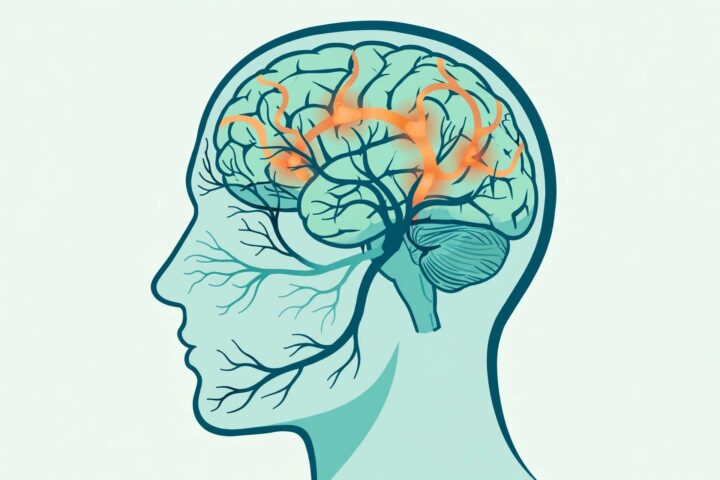
Central sensitization is an amplified response of the central nervous system to sensory input. In the 2022 review by Ferrillo and colleagues, it is described as hyperexcitability of neurons in the spinal cord’s dorsal horn — and, for the face and jaw, in the trigeminal system — so that signals are turned up on their way to the brain. Two consequences follow. Hyperalgesia means a genuinely painful stimulus hurts more than it should. Allodynia means a stimulus that should not hurt at all — light pressure on the cheek, gentle chewing, a cold drink — starts to hurt.
A useful everyday image is a volume knob stuck too high. The input from the jaw may be modest, but the amplifier is turned up, so the experience is loud. The review notes that this mechanism may underlie pain that persists beyond a normal time of healing, and that the same process is implicated in other chronic conditions that often travel with chronic TMJ pain, including fibromyalgia, migraine, tension-type headache, and irritable bowel syndrome. That overlap is one reason people with long-standing jaw pain so often report headaches or widespread aching as well — a pattern our article on how stress affects TMJ disorders also describes from the stress side.
Two honest caveats belong here. First, central sensitization cannot be measured directly with a single test; clinicians infer it from the pattern — pain that is widespread, disproportionate, or accompanied by heightened responses to pressure — sometimes using pressure-pain thresholds or sensory testing. Second, the evidence for exactly how central it is in TMD is still developing: the 2022 review is clear that the literature lacks strong agreement, even though conservative treatments appear to help. Treat the concept as a well-supported framework, not a settled verdict on your individual case.
What are the signs your jaw pain has become chronic?
No single sign proves it, but a cluster of them should prompt a reassessment rather than another round of the same local treatment:
- Duration: pain present, or repeatedly returning, beyond 3 months.
- Spread: pain that has widened from one spot in the jaw to the temple, ear, neck, or the other side — or referred pain felt away from the tissue being pressed.
- Sensitivity: gentle chewing, light touch, or modest pressure hurts out of proportion (the allodynia and hyperalgesia pattern described above).
- Company it keeps: frequent headaches, poor sleep, fatigue, low mood, or anxiety alongside the jaw pain. The 2022 review notes that anxiety, frustration, and depression can contribute to the development, persistence, and worsening of chronic pain.
- Function and life impact: avoiding foods, dreading dental visits, difficulty concentrating, or cancelling plans because of pain.
- Stalled response: rest, soft food, and a guard helped at first but progress has plateaued, or relief lasts hours instead of weeks.
Some signs are not chronic-pain signs at all and need prompt assessment in their own right: a jaw that locks and will not close or open, swelling, fever, recent trauma, unexplained weight loss, new numbness, or pain that steadily worsens despite care. Those point to a specific problem to diagnose, not a pain system to manage.
Why does treating only the jaw sometimes stop working?
If the amplifier is the problem, turning down the input only helps so far. A splint can reduce load on the joint and protect teeth — as our comparison of a TMJ splint vs. a night guard explains — but it does not directly reset a sensitized nervous system. The same applies to repeatedly adjusting the bite, replacing fillings, or escalating to irreversible procedures in search of a mechanical fix for what has become a pain-processing problem.
The guidance is unusually consistent on this point. The NIDCR advises that, because evidence for many TMD treatments is limited, experts recommend conservative treatment and avoiding treatments that permanently change the jaw joints, teeth, or bite, or that involve surgery. The UK guideline on management of painful TMD in adults (Royal College of Surgeons’ Faculty of Dental Surgery / NHS Getting It Right First Time, version 1.1, 2025) builds its care pathway around supported self-management and conservative care, with referral for the cases that need it. And the international INfORM consensus on standards of care for TMD makes the same paradigm shift explicit: technical dental or surgical interventions typically play only a minor role in the broader management of TMD pain, which is now approached with a medical, biopsychosocial model rather than a purely dental one.
None of that means the jaw is irrelevant. A specific joint problem — a disc that displaces and locks, arthritis, an injury — still needs specific care, and ongoing peripheral input from an overloaded joint or muscle can keep feeding the amplifier. It means the order changes: calm the input with reversible measures, and treat the amplifier at the same time.
What does multidisciplinary care for chronic TMJ pain look like?
Multidisciplinary care sounds grand; in practice it is a small team, coordinated by one clinician — often an orofacial pain specialist, or a dentist working with your physician — each addressing a different layer of chronic TMJ pain:
| Acute jaw pain | Chronic TMJ pain | |
|---|---|---|
| Typical course | Days to a few weeks, steadily improving | Persists or recurs beyond 3 months, often in waves |
| Main driver | Tissue overload, injury, or inflammation | Tissue input plus a sensitized pain system |
| First moves | Rest, soft food, heat or cold, short-term pain relief | Those, plus physical therapy, self-management, sleep and stress care |
| Who is involved | Usually one clinician | A coordinated team: dental, physical therapy, behavioural health, medical |
| Goal | Settle the episode | Lower pain sensitivity, restore function, prevent flares |
Physical therapy and rehabilitation. The 2022 review lists physical therapy among the first-line approaches for TMD with central sensitization, and the NIDCR notes that manual therapy can help improve function and relieve pain. What that involves in practice — assessment, hands-on treatment, and a home exercise programme — is set out in our guide to physical therapy for TMJ disorders.
Self-management and behavioural health. The NIDCR’s self-management list is practical: learn about your specific type of TMD, notice and reduce habits such as clenching and gum chewing, practise relaxation, set goals, and stay involved in activities that matter to you. Cognitive behavioural therapy and biofeedback, usually offered by a psychologist, can help manage TMD — they target the amplifier directly: attention, muscle tension, and the stress–pain loop.

Appliances, used with a defined job. A stabilization splint may still have a role — protecting teeth and reducing load — but as one part of the plan, reviewed over time, not as the whole answer. The same caution applies to appliances worn for other reasons: our article on oral appliances for sleep apnea shows why jaw symptoms need monitoring whenever a device changes how the jaw is loaded overnight.
Medication, carefully chosen. Short-term anti-inflammatory medication may help a flare; medicines used for chronic pain are a clinician’s decision, made with your full history, and reviewed — not a self-prescribed escalation. The 2022 review lists pharmacological treatment among first-line options while noting there is still no agreement on a single best approach, which is exactly why medication belongs inside a coordinated plan rather than as a sequence of experiments.
Sleep. Poor sleep and chronic pain reinforce each other, and insomnia is associated with central-sensitization symptoms in painful TMD. Treating sleep problems — including assessing for sleep apnea or sleep bruxism when the history suggests them — is part of pain care, not an extra.
What can you do day to day while jaw pain is chronic?
Day-to-day management aims at two targets: less input to the amplifier, and a calmer amplifier. Keep the jaw’s workload modest during flares — softer foods, smaller bites, no gum — without putting the jaw on permanent rest; gentle movement and the exercises your therapist gives you maintain function. Use heat or cold, whichever you find helps, as the NIDCR suggests alongside gentle stretching. Build in deliberate jaw-relaxation moments through the day: lips together, teeth apart, tongue resting — and notice the clenching moments (traffic, screens, deadlines) that our stress article describes.
Protect sleep as actively as you protect the jaw: a regular sleep schedule, and a conversation with your clinician if snoring, witnessed pauses, or morning headaches are part of your picture. Pace activity rather than swinging between overdoing it on a good day and crashing on the next — graded, steady activity is the pattern chronic-pain care usually recommends. Finally, track simply: a brief note of pain level, sleep, and what you were doing gives your team something real to work with at review, and often reveals a pattern — a particular habit, a poor-sleep lag, a workload peak — that no scan would show.
Set a review point. If, after a consistent period of conservative care, pain is unchanged or worse, or function is shrinking, ask for reassessment or referral to an orofacial pain service rather than accepting either irreversible treatment or no treatment.
Frequently asked questions
How long does jaw pain have to last before it is called chronic?
The threshold used for chronic primary pain in ICD-11 is pain that persists or recurs for longer than 3 months, together with significant emotional distress and/or functional disability, and no better explanation. Chronic TMJ pain is generally understood in those terms. You do not need to wait 3 months to seek care, however — locking, swelling, trauma, or steadily worsening pain should be assessed promptly, whatever the calendar says.
Does central sensitization mean the pain is in my head?
No. Central sensitization is a physical change in how the central nervous system processes signals: neurons become hyperexcitable, so real input from the jaw is amplified on its way to the brain. The pain is genuinely felt in the jaw; the amplifier sits in the nervous system. That distinction matters because it changes treatment — calming the amplifier (sleep, stress, graded activity, behavioural therapy) becomes as relevant as treating the jaw itself.
Will a splint cure chronic TMJ pain?
Probably not on its own, and it should not be sold to you that way. A stabilization splint can protect teeth and reduce load on the joint, and it remains a reasonable part of conservative care. But if a sensitized pain system is part of the picture, a splint alone does not address it. The NIDCR also cautions that evidence for many TMD treatments is limited and advises avoiding anything designed to permanently change your bite.
When should I ask for a referral to a specialist?
Ask when pain has persisted or kept returning beyond about 3 months despite consistent conservative care, when it is spreading or accompanied by headaches, widespread pain, or major sleep problems, when your jaw locks, or when you are being offered irreversible treatment — bite changes, extensive dental work, or surgery — for pain that has not had a specialist assessment. An orofacial pain specialist can coordinate the multidisciplinary plan and review whether a specific joint problem also needs treating.
Conclusion
Chronic TMJ pain is not simply acute pain that has overstayed; it is a different kind of problem, in which a sensitized nervous system amplifies the jaw’s signals long after the original trigger has settled. Recognising that shift is what unlocks the right care: conservative, reversible treatment for the jaw, physical therapy and self-management for function and habits, behavioural and sleep care for the amplifier, and medication chosen and reviewed inside one coordinated plan. The goal is realistic and worthwhile — less pain, better function, fewer and shorter flares — even if it is reached gradually rather than in a single procedure.
If your jaw pain has passed the 3-month mark, keeps returning, or is spreading and disrupting sleep and daily life, bring that timeline to your dentist or clinician and ask whether a chronic-pain approach — and, if needed, an orofacial pain referral — is right for you.
This article is for educational purposes only and is not medical advice. It is general information, not a diagnosis or a recommendation for any individual. Discuss persistent jaw pain, locking, swelling, or any new or worsening symptoms with your own dentist or clinician.
Sources
- Ferrillo M, et al. Pain Management and Rehabilitation for Central Sensitization in Temporomandibular Disorders: A Comprehensive Review. International Journal of Molecular Sciences, 2022 — ICD-11 chronic primary pain definition, central sensitization mechanisms, and first-line conservative management — mdpi.com
- National Institute of Dental and Craniofacial Research (NIDCR) — Temporomandibular Disorders (TMD): more than 30 conditions, many short-lived, conservative-first treatment, physical therapy, self-management, CBT and biofeedback — nidcr.nih.gov
- Beecroft E, et al. Management of Painful Temporomandibular Disorder in Adults. NHS England Getting It Right First Time / Royal College of Surgeons’ Faculty of Dental Surgery guideline, version 1.1, 2025 — care pathway built on supported self-management and conservative care — rcseng.ac.uk
- Manfredini D, Kandasamy S. Temporomandibular disorders: Do we finally have a consensus standard of care for dissemination? INfORM consensus, 2025/2026 — the shift from a dental to a medical, biopsychosocial model, with technical interventions playing a minor role in TMD pain management — doi.org
About this information
Consult the sources listed in the article. This notice does not certify an individual clinical review.
This article is for education only and is not medical advice. Talk to a qualified clinician about your own symptoms.


0 Comments