Educational information · Not medical advice
In brief
Anti-inflammatory eating may support jaw pain care, but evidence is still limited. Learn what helps, what is hype, and how to eat softly during a flare.
In this article
- Can food really affect jaw pain?
- What does the evidence actually show about anti-inflammatory eating and TMD?
- Which parts of anti-inflammatory eating are most likely to help?
- How should you eat during a jaw pain flare?
- What is hype, and what should you avoid?
- When should diet changes not replace an assessment?
- Frequently asked questions
- Conclusion
- Sources
Key Takeaways
- Anti-inflammatory eating is a reasonable, low-risk support for jaw pain care, but it is not a proven treatment for temporomandibular disorder (TMD) on its own.
- A systematic review in BMC Oral Health found the diet–TMD evidence limited and heterogeneous, and insufficient for firm causal or therapeutic conclusions.
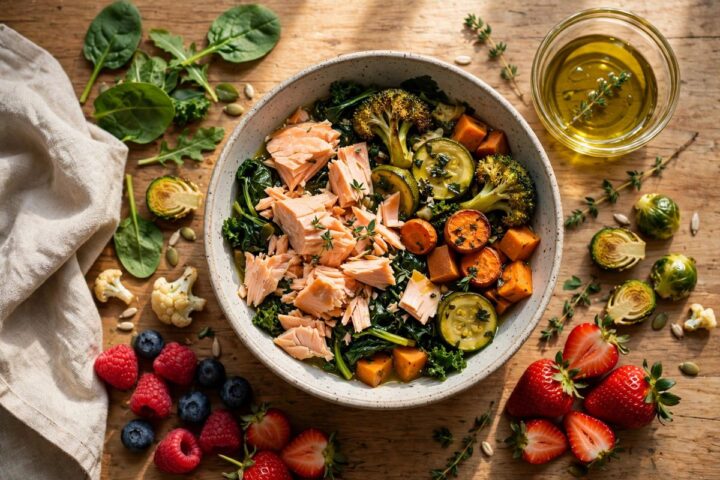
- The most useful changes are practical: a Mediterranean-style pattern, oily fish and other omega-3 sources, plenty of plants and fibre, and fewer ultra-processed foods — made soft enough for a sore jaw.
- Texture matters as much as nutrients during a flare: the NIDCR lists eating soft foods as a first self-care step for TMD.
- Do not buy expensive supplements or follow a strict elimination diet for jaw pain without clinical advice and a reason to suspect a specific problem.
Can changing what you eat really change how your jaw feels? It is a fair question, and anti-inflammatory eating is often sold as if the answer were a simple yes. The honest answer is more useful: anti-inflammatory eating may support jaw pain care as part of a wider plan, but the direct evidence in TMD is still limited, and no diet replaces an assessment when pain persists, locks, or worsens.
This article separates what helps from what does not. It explains what the research actually shows about anti-inflammatory eating and jaw pain, which parts of that pattern are most plausible and practical, how to keep food soft during a flare without losing nutrition, and which claims are hype. A quick note on terms: TMJ is the temporomandibular joint in front of each ear; TMD means temporomandibular disorder, the group of more than 30 conditions affecting the jaw joint and the muscles that move it, as the U.S. National Institute of Dental and Craniofacial Research (NIDCR) defines them.
Can food really affect jaw pain?
Food can affect jaw pain in two different ways, and keeping them apart prevents most of the confusion around anti-inflammatory eating. The first way is mechanical: chewing is work. Hard, crunchy, or very chewy foods load the joint and the chewing muscles, so the same meal can be fine on a good week and painful during a flare. The second way is biological: dietary patterns can influence systemic inflammation and pain processing over time, which is the idea behind anti-inflammatory eating in chronic pain more broadly.
The mechanical effect is immediate and well accepted in self-care guidance. The biological effect is slower, less certain, and specific to the person. That is why anti-inflammatory eating should be framed as background support — improving the overall pattern while you also manage load, sleep, stress, and any specific joint or muscle problem — rather than as a switch that turns jaw pain off. Our article on when TMJ pain becomes chronic explains why long-lasting pain usually needs that wider, layered approach.
What does the evidence actually show about anti-inflammatory eating and TMD?
Start with the most direct review. A systematic review in BMC Oral Health searched several major databases for studies of diet, nutrition, and painful TMD. Out of 7,760 records, only seven studies judged to have a low risk of bias were included. Its conclusion was careful: some dietary components may be associated with TMD symptoms or pain responses, but the findings were limited and heterogeneous, and insufficient to support firm causal or therapeutic conclusions. Prospective cohort studies did not show that earlier diet quality independently predicted later TMD.
7 of 7,760 — only seven low-risk-of-bias studies were included in the BMC Oral Health systematic review of diet and painful TMD. That small base is why strong promises about any single diet for jaw pain are not justified.
Two findings from that review are worth naming because they are often turned into headlines. In experimental work, monosodium glutamate (MSG) ingestion increased pain intensity in people with myofascial TMD. That is a specific experimental result, not proof that everyone with jaw pain must avoid MSG in normal meals. And the only randomized trial in the review found no significant pain difference between vitamin D supplementation and diclofenac — which undercuts the idea that a single supplement is a proven shortcut.
There is also observational work on fatty acids. In the Hispanic Community Health Study/Study of Latinos, analysed by Sanders and colleagues in Public Health Nutrition in 2025, each standard-deviation increase in dietary arachidonic acid — a long-chain omega-6 fatty acid — was associated with 12% higher odds of painful TMD, while each standard-deviation increase in omega-3 supplement use was associated with lower odds. Dietary intake of the long-chain omega-3s EPA and DHA itself was not associated with TMD in that analysis. Association is not causation, and supplement use can track with other health behaviours, so treat this as a reason to favour a balanced pattern, not as a prescription for fish-oil capsules.
Which parts of anti-inflammatory eating are most likely to help?
The pattern most often described as anti-inflammatory eating is close to a Mediterranean-style pattern: vegetables, fruit, legumes, whole grains, olive oil, nuts and seeds, herbs, and fish, with less ultra-processed food, processed meat, refined sugar, and excess alcohol. The systematic review notes that Mediterranean-style profiles, rich in omega-3 fatty acids and fibre, have been pointed to as more favourable for reducing pain symptoms in the wider chronic-pain literature. For jaw pain specifically, the value is plausibility plus general health — not a guaranteed pain reduction.

Build the pattern, do not chase single nutrients. Add oily fish or other omega-3 sources if you eat them, make plants the bulk of most meals, choose whole grains when your jaw tolerates them, and use olive oil as a main fat. If chewing raw vegetables or nuts is painful, cook, blend, chop, or grind them — the nutrient idea survives the texture change.
Cut the obvious pro-inflammatory load gently. Sugary drinks, frequent ultra-processed snacks, and heavy alcohol use are reasonable things to reduce for general health and sleep, both of which matter for pain. You do not need a perfect diet for this to be worthwhile, and guilt about food is not a treatment. Small, sustained changes beat a strict two-week overhaul you abandon.
Protect nutrition while you protect the jaw. Painful TMD can itself change eating: the review notes that people may restrict foods that are hard to chew and end up with lower intake of some nutrients. If you are living on a narrow soft diet for weeks, that is a clinical issue to raise — with your dentist, clinician, or a dietitian — not a failure to fix alone. Stress also drives both clenching and comfort eating for many people, a connection our article on anxiety, jaw clenching, and the stress–pain loop covers in detail.
How should you eat during a jaw pain flare?
During a flare, texture comes first. The NIDCR lists eating soft foods among the first simple steps when jaw discomfort starts, alongside applying heat or cold with gentle stretching, short-term over-the-counter pain relief if appropriate, and reducing habits such as clenching and gum chewing. Anti-inflammatory eating during a flare therefore means soft versions of the same pattern, for a short period — not a permanent soft diet.
| Goal | Harder version (pause in a flare) | Softer version (keep the idea) |
|---|---|---|
| Omega-3 and protein | Tough steak, jerky | Flaky fish, eggs, tofu, lentil soup |
| Plants and fibre | Raw carrots, whole nuts, crusty bread | Cooked vegetables, blended soups, nut butters, oatmeal |
| Whole grains | Chewy bagels, granola clusters | Soft rice, pasta, porridge |
| Fruit and polyphenols | Whole hard apples, dried fruit | Berries, stewed fruit, smoothies |
Cut food into small pieces, chew slowly, and avoid very wide bites, gum, and chewy sweets while symptoms are active. As pain settles, reintroduce normal textures gradually so the jaw keeps its function and your diet stays varied. If you cannot return to normal textures, or you are losing weight, get assessed rather than extending restrictions on your own. Appliance choices interact with eating and load too, as our comparison of a TMJ splint vs. a night guard explains.
What is hype, and what should you avoid?
Strict elimination diets as a default. Gluten-free or other restrictive diets have been reported in small contexts, but the review does not support making them a routine TMD treatment. Cutting whole food groups without a diagnosed reason risks poorer nutrition and more stress around eating. If a specific food reproducibly triggers your symptoms, discuss a structured trial with a clinician or dietitian instead of improvising a permanent ban.
Supplement stacks. Vitamin D, magnesium, turmeric, and fish oil are all marketed for jaw pain. The direct TMD evidence reviewed here does not establish any of them as a proven pain treatment, and supplements can interact with medicines or be inappropriate in pregnancy, kidney disease, or before surgery. Correct a documented deficiency with your clinician; do not stack products on the strength of testimonials.
Detoxes and miracle timelines. Anti-inflammatory eating, if it helps pain at all, works as a pattern over weeks alongside other care — not as a cleanse that resets the jaw in days. Any programme that promises to cure TMD, replace dental assessment, or permanently change your bite through diet alone is claiming more than the evidence allows. The NIDCR’s broader caution applies here too: favour conservative, reversible care and avoid treatments that permanently change the jaw, teeth, or bite without strong evidence.
When should diet changes not replace an assessment?
Get a dental or medical assessment if jaw pain persists or keeps returning, if opening is limited, if the jaw locks open or closed, or if pain interferes with eating, sleep, or work. Seek prompt care for swelling, fever, recent injury, new numbness, unexplained weight loss, or pain that steadily worsens. Those signs need a diagnosis, not a meal plan.
Also raise diet itself at the appointment if you have lost weight, are avoiding many foods, have a history of an eating disorder, are pregnant, or take medicines that affect nutrition or bleeding risk. A dietitian can help you keep a soft or anti-inflammatory pattern nutritionally complete. The goal of anti-inflammatory eating is to support care, never to delay it.
Frequently asked questions
Does anti-inflammatory eating cure TMJ pain?
No. Anti-inflammatory eating has not been shown to cure TMD. The BMC Oral Health systematic review found the diet and TMD evidence limited and insufficient for firm therapeutic conclusions. A Mediterranean-style pattern may support general health and chronic-pain care, and soft textures help during flares, but persistent jaw pain still needs assessment and a wider conservative plan.
What foods should I avoid with jaw pain?
During a flare, avoid foods that load the jaw mechanically: hard, crunchy, and very chewy items, gum, and very large bites. For the longer-term pattern, reducing sugary drinks, ultra-processed foods, processed meat, and heavy alcohol use is reasonable for general inflammation and sleep. There is no evidence-based universal ban list for everyone with TMD, so avoid permanent restrictions without clinical advice.
Should I take omega-3 or vitamin D supplements for TMJ?
Not on the strength of current TMD evidence alone. Observational data linked omega-3 supplement use with lower odds of painful TMD, but dietary EPA and DHA were not associated, and association is not proof. The only randomized trial in the systematic review found no significant pain difference for vitamin D versus diclofenac. Discuss supplements, deficiencies, and interactions with your clinician first.
How long should I stay on soft foods for jaw pain?
Use soft foods as a short-term flare measure, as the NIDCR describes for early TMD discomfort, then reintroduce normal textures gradually as pain settles. There is no single fixed number of days for everyone. If you still cannot chew normally after a flare should have settled, are losing weight, or keep needing a very restricted diet, book an assessment instead of extending it alone.
Conclusion
Anti-inflammatory eating is best understood as sensible background support for jaw pain: a Mediterranean-style, plant-rich pattern, made soft when your jaw needs it, with fewer ultra-processed foods and no expensive promises attached. The direct evidence in TMD is honestly limited — seven low-risk-of-bias studies in the latest systematic review, with no firm causal conclusion — so the strongest reasons to eat this way are general health, nutritional completeness, and compatibility with conservative care.
Keep the two jobs of food separate: texture controls today’s load, pattern may influence the longer-term pain environment. If pain persists, returns, or restricts what you can eat, let an assessment lead and let diet support it — not the other way round.
This article is for educational purposes only and is not medical advice. It is general information, not a diagnosis or a recommendation for any individual. Discuss jaw pain, diet changes, supplements, or restricted eating with your own dentist, clinician, or dietitian.
Sources
- Can poor nutrition and diet influence temporomandibular disorder? A systematic review, BMC Oral Health (7,760 records screened, seven low-risk-of-bias studies included; evidence limited and insufficient for firm causal conclusions; MSG experimental finding and vitamin D trial) — link.springer.com/article/10.1186/s12903-026-08975-3
- Sanders AE et al. Long-chain PUFA and painful temporomandibular disorder in the Hispanic Community Health Study/Study of Latinos, Public Health Nutrition, 2025 (arachidonic acid associated with higher odds of painful TMD; omega-3 supplement use associated with lower odds; dietary EPA+DHA not associated) — Cambridge / Public Health Nutrition PDF
- National Institute of Dental and Craniofacial Research (NIDCR) — Summary of Treatment for Temporomandibular Disorders (soft foods listed among the simplest first treatments, with short-term NSAIDs and self-management) — nidcr.nih.gov/health-info/tmd
About this information
Consult the sources listed in the article. This notice does not certify an individual clinical review.
This article is for education only and is not medical advice. Talk to a qualified clinician about your own symptoms.
0 Comments