
Educational information · Not medical advice
In brief
TMJ migraine Botox, CGRP blockers and triptans explained: what migraine treatment can and cannot do for jaw pain when you have both conditions together.
In this article
Key Takeaways
- Migraine drugs treat migraine. None of the CGRP blockers, Botox for chronic migraine, or triptans is approved as a treatment for a temporomandibular disorder (TMD) itself.
- The tmj migraine botox question comes up because the conditions overlap: migraine and TMD share the trigeminal nerve system, and treating migraine well can reduce the total pain burden even when jaw treatment is still needed.
- CGRP-targeting therapies are a first-line option for migraine prevention in the American Headache Society’s 2024 position statement. Direct evidence that they relieve TMD jaw pain is still limited to mechanism and early trials, not proven treatment.
- Botox has two separate stories: an established, protocol-specific preventive for chronic migraine, and off-label, uncertain use for muscle-driven TMD. One does not prove the other.
- Triptans are acute migraine medicines, not jaw-pain medicines — and the jaw, neck, or chest tightness some people feel after a dose is a known triptan sensation that should not be confused with TMJ pain.
If you live with both jaw pain and migraine, the tmj migraine botox search makes sense: the same clinic visit often mentions a CGRP blocker for migraine prevention, Botox for chronic migraine, and a triptan for attacks, while your jaw still aches. The short answer is that migraine treatment can help the migraine part of that picture, sometimes a lot, but it does not replace diagnosis and care for the jaw itself. This article separates what is proven for migraine, what is plausible for TMJ, and what is still unproven, so the tmj migraine botox conversation with your clinicians is a clearer one.
A note on terms: TMJ is the temporomandibular joint in front of each ear. TMD is the group of temporomandibular disorders affecting that joint and the chewing muscles. CGRP stands for calcitonin gene-related peptide, a neuropeptide involved in migraine pain signalling. When people say tmj migraine botox, they usually mean onabotulinumtoxinA (Botox) used either under its chronic-migraine protocol or, off-label, into tight jaw muscles — two different uses that are easy to conflate.
Why do TMJ and migraine overlap so often?
The overlap is real, not imagined. A 2024 systematic review with meta-analysis of temporomandibular disorders in migraine and tension-type headache patients found the risk of TMD was significantly higher in people with headache than in controls, with higher values in migraine. Earlier population work reached a similar pattern: TMD symptoms were more common in migraine than in people without headache, and the association was stronger for migraine than for tension-type headache.
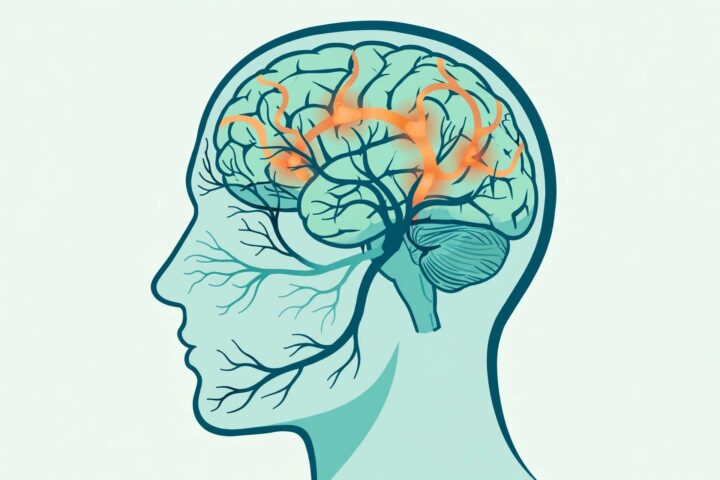
Mechanism helps explain why. A 2023 review in the International Journal of Molecular Sciences explored CGRP-mediated trigeminal ganglionitis as a biomolecular link between temporomandibular disorders and chronic headaches. It proposed that neurons in the trigeminal ganglia — the nerve cluster carrying feeling from the face, jaw, and head — can cross-excite each other and release CGRP, contributing to peripheral and central sensitisation of the trigeminal system in both conditions. That is a plausible shared pathway, not proof that blocking CGRP will fix a jaw joint or a sore masseter muscle.
The practical consequence is diagnostic, not just biological. Headache attributed to TMD, migraine with jaw and temple pain, and muscle pain that worsens during a migraine attack can look alike. Our side-by-side guide to tension headache vs migraine vs TMJ headache and our overview of the TMD, TMJ and migraine connection walk through how clinicians tell them apart. Getting that distinction right is what decides whether a migraine drug, jaw care, or both are the right plan.
Do CGRP blockers help TMJ pain, or only migraine?
CGRP-targeting therapies include monoclonal antibodies — erenumab, which targets the CGRP receptor, and fremanezumab, galcanezumab, and eptinezumab, which target the CGRP ligand — and the smaller gepant medicines used for prevention or acute treatment in migraine. In 2024 the American Headache Society positioned CGRP-targeting therapies as a first-line option for the prevention of migraine, without requiring prior failure of other preventive classes first. That statement was about migraine prevention. It did not make these drugs TMD treatments.
For TMD specifically, the evidence is at an earlier stage. The 2023 trigeminal review noted that evidence for CGRP involvement in TMD had encouraged clinical trials examining whether monoclonal antibody therapy against the CGRP receptor could reduce TMD pain. Encouraged trials are not the same as demonstrated benefit. As of the sources read for this article, there is no guideline endorsement of a CGRP blocker as a treatment for jaw pain, disc displacement, or joint arthritis, and no CGRP drug carries a TMD indication.
That leaves a realistic middle position. If you have both conditions and a CGRP therapy reduces your migraine days, your overall head, temple, and face pain may well improve, and attacks that used to trigger jaw clenching may happen less often. That is a genuine benefit of treating migraine well. It is different from claiming the drug treated the TMD. If jaw pain, clicking, locking, or limited opening persists on good migraine control, that remainder needs its own assessment. Our explainers on what CGRP does in the body and the CGRP revolution in migraine treatment cover the migraine side in more depth.
Cost and access also belong in the tmj migraine botox discussion, because CGRP therapies are expensive and insurers often still apply step-therapy rules despite the 2024 first-line position. That is another reason not to pursue a CGRP drug for jaw pain alone, outside a migraine indication, without very clear advice from the prescribing clinician.
What about Botox when you have both conditions?
Botox is where the tmj migraine botox confusion is greatest, because the same product name appears in both conversations. For chronic migraine, onabotulinumtoxinA is an established preventive given under a standardised protocol — the PREEMPT programme used fixed injection sites across the head and neck, in cycles about twelve weeks apart, for people meeting the chronic-migraine definition. A 2026 review of botulinum toxin across craniocervical conditions summarised the position plainly: efficacy is protocol-specific in chronic migraine and uncertain elsewhere, and onabotulinumtoxinA is established for chronic migraine while use in tension-type headache, myogenous TMD, and bruxism is off-label or experimental.
For muscle-driven TMD, the picture is more cautious. An umbrella review of systematic reviews of botulinum toxin A for myogenous temporomandibular disorders found it was more effective than placebo for pain intensity in some syntheses, but not superior to standard treatments, did not improve jaw movement over placebo or standard care, and carried a higher risk of adverse effects on muscle and bony tissue. Its synthesis concluded there are indications of effectiveness supported by moderate evidence, while recommending it be considered a later alternative rather than a first step, because of those risks.
So a person with both chronic migraine and TMD may reasonably receive Botox for the migraine indication, and may notice jaw-muscle pain change as well — or may not. What the migraine protocol does not do is prove that extra injections into the masseter, or a separate TMD Botox course, are safe and effective for that individual. Dose, sites, and goals differ between the two uses. Our evidence review of TMJ and Botox covers the jaw side, including duration, risks, and who it is not for, and is worth reading alongside any migraine Botox plan so the two clinicians involved are working from the same picture.

Do triptans help TMJ pain?
Triptans such as sumatriptan are acute migraine medicines. They act on serotonin 5-HT1B/1D receptors, reduce trigeminal release of vasoactive neuropeptides including CGRP, and are taken during an attack — they are not preventives and they are not general painkillers for jaw muscle pain. There is no evidence base for using a triptan to treat TMD pain on a non-migraine day, and doing so risks medication-overuse problems and delays care that matches the jaw problem.
Triptans do create one TMJ look-alike worth knowing. A review of serotonergic cardiac adverse events with triptans noted that serotonin 1B/1D agonists are vasoconstrictors, that retrosternal chest, arm, and jaw pain following triptan use is generally attributed to triptan sensations and dismissed as noncardiac, but that triptans narrow normal coronary arteries, can occasionally trigger vasospasm, and are contraindicated in atherosclerotic vascular disease. In plain terms: tightness or heaviness in the jaw, neck, or chest shortly after a dose is a recognised triptan sensation, usually temporary — but crushing chest pain, pain with breathlessness or sweating, or pain brought on by exertion needs emergency assessment, not reassurance.
If a triptan reliably eases an attack that includes temple and jaw-area pain, that response supports that the episode was migraine; it does not diagnose the state of your joint. Our guide to sumatriptan explains how that medicine is used for migraine, and our article on migraine aura without headache covers attacks where head pain is not the main feature at all.
Migraine drugs and TMJ, side by side
| Treatment | Established use | TMJ / TMD status | Main cautions |
|---|---|---|---|
| CGRP monoclonal antibodies and gepants | Migraine prevention (and, for some gepants, acute migraine); first-line preventive option per AHS 2024 | Mechanistic link via trigeminal CGRP; TMD trials encouraged / early — no TMD indication or guideline endorsement | Cost and insurance step therapy; medicine-specific warnings — discuss pregnancy planning and other conditions with the prescriber |
| Botox (onabotulinumtoxinA), chronic-migraine protocol | Prevention of chronic migraine under the standardised PREEMPT-style protocol | Separate off-label use for myogenous TMD is uncertain, not superior to standard care for movement, and is a later option | Muscle and bony tissue effects with repeated TMD use; migraine and TMD injection sites and goals differ |
| Triptans (for example sumatriptan) | Acute treatment of a migraine attack | No role as a TMD pain treatment; jaw tightness after a dose is usually a triptan sensation | Vasoconstrictors — contraindicated in atherosclerotic vascular disease; chest, arm, or jaw pain after a dose needs the distinction in the text above |
| Conservative TMD care | Education, self-care, jaw rest, physical therapy, and a splint to protect teeth where indicated | The foundation for TMD itself, per NIDCR guidance favouring conservative, reversible treatment first | Avoid treatments that permanently change the jaw, teeth, or bite without specialist advice |
What should you ask when you have both?
Start by asking each clinician the same clarifying question: which condition is this treatment for? Useful follow-ups are: Do I meet the definition for chronic migraine that the Botox protocol and some preventives are based on? If we start a CGRP therapy for migraine, how will we judge it — by migraine days, by jaw pain, or by both separately? Who is coordinating the jaw side while migraine treatment changes — my dentist, an orofacial pain specialist, or my headache clinician? And if jaw pain remains after migraine improves, what is the next TMD step?
Keep a simple record for a few weeks before that conversation: migraine days, jaw-pain days, whether they coincide, clenching or waking with a sore jaw, and what each medicine actually changed. That record prevents a common error in the tmj migraine botox story — crediting, or blaming, a migraine drug for jaw pain that was following its own pattern all along. The National Institute of Dental and Craniofacial Research advises that many TMDs are temporary and that simple self-care and conservative, reversible treatment come first for the jaw; that foundation stays in place whichever migraine medicines you use.
Seek prompt care rather than self-adjusting migraine medicines if you develop a locked jaw, swelling or fever, new weakness or speech change, a first or worst-ever headache, or chest pain with breathlessness or sweating after a triptan. Those need in-person assessment, not a change of dose at home.
Frequently asked questions
Can a CGRP blocker cure my TMJ?
No CGRP blocker is approved or guideline-endorsed as a cure or treatment for TMD. CGRP is involved in trigeminal pain signalling shared by migraine and TMD, and TMD trials have been encouraged by that link, but proven benefit is for migraine prevention. Jaw pain that persists on migraine treatment needs its own TMD assessment and conservative care.
If Botox helps my chronic migraine, will it also fix my jaw?
It might reduce some muscle-related pain, but that is not guaranteed and is not what the chronic-migraine protocol is designed or proven to do. Evidence for Botox in myogenous TMD is uncertain, it was not superior to standard treatments in umbrella-review synthesis, and repeated TMD injections carry muscle and bone risks, so any jaw-specific use is a separate, off-label decision.
Should I take a triptan for TMJ pain?
No. Triptans are acute migraine medicines, not treatments for TMD jaw pain, and there is no evidence base for using them on a non-migraine day for jaw pain. Jaw, neck, or chest tightness shortly after a triptan dose for migraine is usually a recognised triptan sensation, but severe, exertional, or breathless chest or jaw pain needs emergency care.
Do I still need a night guard or jaw treatment if my migraine improves?
Often, yes. Better migraine control can lower your total pain burden, but it does not protect teeth from grinding, unload a sore joint, or treat a disc problem. Whether you need a splint, physical therapy, or other TMD care depends on your jaw examination, not only on your migraine diary, so keep both parts of the plan under review.
Conclusion
The honest answer to do migraine drugs help TMJ is: they help migraine, and migraine and TMD overlap enough — through the trigeminal system and CGRP signalling — that good migraine control can change how your face and jaw feel overall. What they have not been shown to do is treat TMD itself. CGRP therapies are first-line for migraine prevention, Botox is protocol-proven for chronic migraine and uncertain and later-line for muscle TMD, and triptans belong to acute migraine attacks, not jaw pain.
Keep the two diagnoses separate on paper even though they feel connected in your body: a migraine plan judged by migraine days, and a conservative, reversible TMD plan judged by jaw pain and function. When both are tracked that way, the tmj migraine botox question stops being a hope that one injection or antibody will do everything, and becomes a practical plan you can review with your headache clinician and your dentist together.
Medical disclaimer: This article is educational information only and is not medical advice. It does not diagnose or prescribe. Medicines discussed here can interact with other medicines and may not be safe in pregnancy or with certain cardiovascular and other conditions. Discuss any medicine, dose, or change with your own dentist, doctor, or pharmacist.
Sources
- Sangalli L, Eli B, Mehrotra S, Sabagh S, Fricton J. Calcitonin Gene-Related Peptide-Mediated Trigeminal Ganglionitis: The Biomolecular Link between Temporomandibular Disorders and Chronic Headaches. International Journal of Molecular Sciences, 2023. MDPI
- Charles AC, Digre KB, Goadsby PJ, et al; American Headache Society. Calcitonin gene-related peptide-targeting therapies are a first-line option for the prevention of migraine: An American Headache Society position statement update. Headache, 2024;64(4):333-341 — as summarised by the CGRP Education & Research Forum. CGRP Forum
- Bizzarri P, Manfredini D, et al. Temporomandibular disorders in migraine and tension-type headache patients: a systematic review with meta-analysis. Journal of Oral & Facial Pain and Headache, 2024.
- Botulinum toxin across craniocervical conditions: efficacy is protocol-specific in chronic migraine and uncertain elsewhere; onabotulinumtoxinA is established for chronic migraine, off-label or experimental for myogenous TMD. Toxins, 2026.
- Botulinum Toxin-A for the Treatment of Myogenous Temporomandibular Disorders: An Umbrella Review of Systematic Reviews — more effective than placebo for pain in some syntheses, not superior to standard treatments, higher risk of muscle and bony adverse effects.
- QT prolongation, Torsade de Pointes, myocardial ischemia from coronary vasospasm, and headache medications. Part 1: review of serotonergic cardiac adverse events with a triptan case. Headache, 2013. PubMed
- National Institute of Dental and Craniofacial Research (NIDCR). Temporomandibular Disorders (TMD). nidcr.nih.gov
About this information
Consult the sources listed in the article. This notice does not certify an individual clinical review.
This article is for education only and is not medical advice. Talk to a qualified clinician about your own symptoms.

0 Comments