Educational information · Not medical advice
In brief
Jaw clenching at night explained: stress, medicines and sleep apnea as causes, how dentists diagnose sleep bruxism, and what actually helps you stop it.
In this article
Key Takeaways
- Jaw clenching at night is sleep bruxism: repetitive jaw-muscle activity during sleep that you cannot control by willpower.
- It rarely has one cause. Stress, genes, caffeine, alcohol, smoking, certain medicines, and sleep arousals can all play a part, and sleep apnea overlaps with it in some people.
- A night guard protects teeth and dental work; it does not reliably stop the clenching itself.
- The useful plan is layered: protect the teeth, review triggers and medicines with your clinicians, and get loud snoring, witnessed pauses in breathing, or heavy daytime sleepiness assessed in their own right.
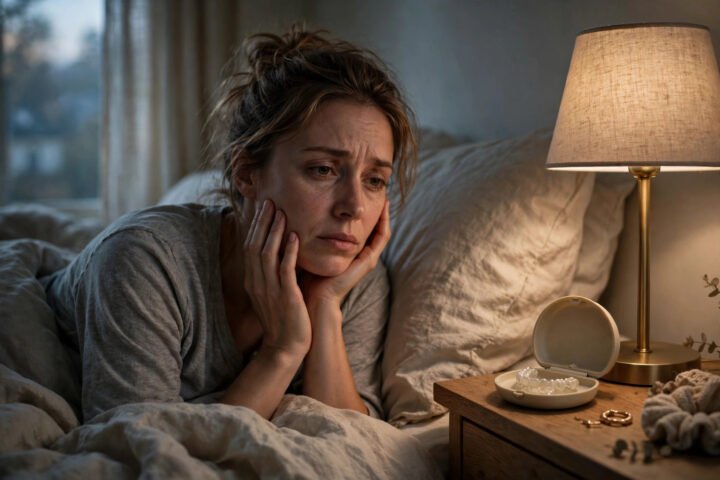
You wake with a tired, tight jaw, a dull headache at your temples, or a partner who heard grinding in the night. That pattern is usually jaw clenching at night, the sleep form of bruxism. This article explains why jaw clenching at night happens, why stress alone is rarely the whole story, and what actually helps — without promising a cure that the evidence does not support.
First, the terms. Bruxism is repetitive jaw-muscle activity — clenching, grinding, bracing, or thrusting. The National Institute of Dental and Craniofacial Research (NIDCR) describes it as grinding, clenching, or gnashing the teeth, awake or asleep. TMJ is the joint in front of each ear; TMD is a temporomandibular disorder affecting that joint and its muscles.
What is sleep bruxism, and how is it different from daytime clenching?
Sleep bruxism happens during sleep, often in bursts linked to brief sleep arousals — short shifts in brain, heart, and breathing activity that happen many times a night in normal sleep. StatPearls, in its bruxism management review updated in 2024, describes sleep bruxism as an exaggerated response to those natural micro-arousals, and notes that it is reported by about 8% to 10% of adults. You are asleep when it happens, so reminders, willpower, and “just relax your jaw” cannot switch it off in the moment.
Awake bruxism is different: silent clenching or bracing while you concentrate, drive, work, or feel stressed. Awareness cues can help by day — lips together, teeth apart, jaw relaxed — in a way they cannot overnight. Many people have both patterns. Our guide to anxiety, jaw clenching, and the stress–pain loop covers the daytime pattern in detail.
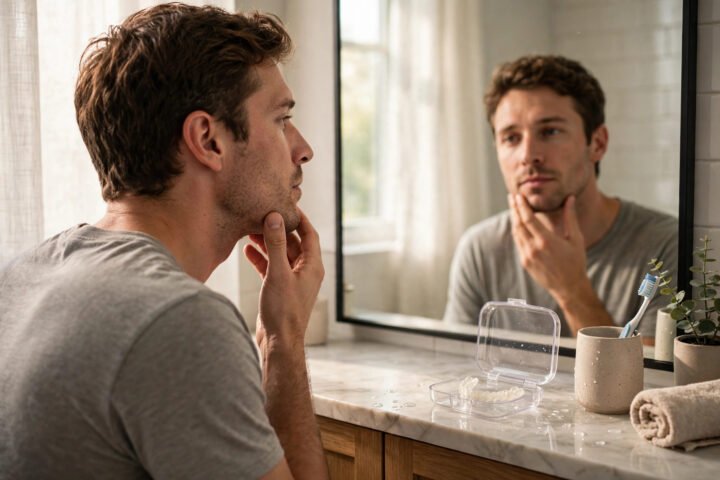
Signs of the sleep form are morning symptoms that ease during the day: jaw soreness or tiredness on waking, a dull temple headache, tooth sensitivity, and, over time, flattened or worn teeth. NIDCR lists those same signs. A dentist often spots the wear before you connect it to sleep.
Why do you clench your jaw at night?
There is no single cause, and anyone who names one cause for every person is oversimplifying. NIDCR lists several factors that appear to play a role: psychosocial factors such as stress, mood, distress, and nervousness; a person’s genes; consuming alcohol or caffeine; smoking; and certain medicines. That list is a useful checklist, not a ranking — the mix differs from person to person.
Two myths are worth dropping. A “bad bite” does not explain most night grinding — modern reviews treat bruxism as mainly centrally driven, arising from sleep arousal systems, not tooth alignment alone. And clenching is not simply stress leaving the body: it occurs in people who do not feel stressed, and not all stressed people grind.
How do stress, medicines, and sleep apnea fit in?
Stress and mood are real contributors. NIDCR includes stress management among approaches that may reduce stress-related responses and decrease bruxism. The limit is that it helps some people a lot and others barely at all for the sleep form, because overnight bursts are tied to arousals as well as to daytime tension. Stress care is worth doing for its own sake.
Medicines deserve a careful timeline review. NIDCR notes that certain medicines used to treat depression, seizures, and attention deficit hyperactivity disorder (ADHD) may increase the chances of having bruxism. If jaw clenching at night began or worsened soon after starting a medicine or changing a dose, tell both the prescriber and your dentist. Do not stop or change a prescribed medicine on your own — the prescriber can weigh timing, dose, and alternatives, and our articles on jaw clenching on Zoloft or Lexapro and on Adderall and Vyvanse jaw clenching walk through what to ask.
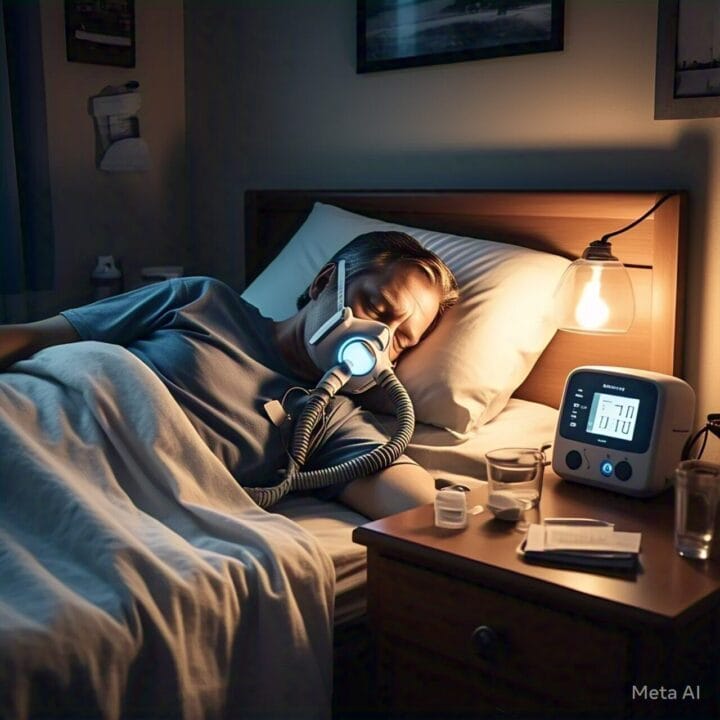
Sleep apnea needs careful wording. Obstructive sleep apnea (OSA) is repeated partial or complete collapse of the upper airway during sleep. A 2025 systematic review in the Journal of Clinical Medicine, covering studies from 2020 to 2025, found that sleep bruxism was consistently more common in people with OSA than in the general population, and suggested possible shared mechanisms through arousals and neurotransmitter changes. But it also concluded that a causal relationship remains unclear, limited by inconsistent diagnostic criteria and moderate study quality. In plain terms: the two overlap, grinding is not proof of apnea, and apnea treatment is not a guaranteed cure for grinding.
So do not buy an apnea appliance just because you grind — but do get assessed if you have the apnea pattern itself: loud snoring, witnessed pauses, gasping, unrefreshing sleep, or strong daytime sleepiness. Our overview of TMJ, sleep apnea, and oral appliances explains how jaw position and breathing interact, and the site’s earlier look at the bruxism and sleep apnea connection covers the overlap in more depth.
How can you stop jaw clenching at night?
There is no treatment proven to stop jaw clenching at night permanently for everyone. A realistic plan has three goals: protect the teeth, reduce morning pain, and address the contributors you actually have.
| Step | What it can do | What it does not do |
|---|---|---|
| Custom night guard / splint | Separates the teeth, protects enamel and restorations, may reduce muscle activity for some people | Does not reliably stop the brain’s overnight clenching bursts |
| Trigger review | Identifies caffeine, alcohol, smoking, late stimulants, and sleep disruption you can change | Does not prove one trigger was the sole cause |
| Medicine review with prescriber | Checks timing and alternatives when symptoms followed a start or dose change | Is not a reason to stop a needed medicine on your own |
| Stress and sleep care | May reduce stress-related responses and fragmented sleep | Is not a guaranteed cure for sleep bruxism |
| Sleep assessment, if indicated | Diagnoses or rules out sleep apnea and other sleep disorders | Is not needed for every person who grinds, and apnea treatment may not end grinding |
NIDCR describes mouth guards as separating the teeth, preventing damage, and possibly reducing muscle activity. A custom guard fits and can be adjusted; a poorly fitting boil-and-bite guard can be bulky or fall out. Our comparison of a TMJ splint vs a night guard explains the difference. If you may have sleep apnea, tell the dentist before a guard is made, because appliance choice and sleep treatment need to be planned together, not in isolation.
Simple evening steps are low-risk: avoid caffeine and alcohol late in the day, do not smoke, keep a regular wind-down, and use warm compresses if your dentist advises them. A 2022 systematic review in the Japanese Dental Science Review found oral appliances tended to reduce bruxism events on some measures, evidence for cognitive-behavioural therapy was not well supported for the sleep form, and drug and injection approaches carried side effects and need more rigorous long-term trials — which is why medicines and Botox are not do-it-yourself answers.
When should you seek help for night clenching?
Book a dental appointment if morning jaw pain keeps returning, or you have tooth wear, chips, sensitivity, a locking jaw, or waking headaches. NIDCR advises regular dental care because you may be unaware grinding is happening until damage appears. Bring a timeline: when symptoms started, medicine changes, caffeine, alcohol, and smoking habits, and any partner reports.
Diagnosis is usually clinical: a history plus an examination for tooth damage and jaw tenderness. A sleep study (polysomnography) is reserved mainly where a sleep disorder such as apnea is suspected, as StatPearls also notes. Most people who grind do not need a sleep lab first; people with strong apnea signs should not rely on a guard alone.
Seek prompt medical care if you have loud snoring with witnessed breathing pauses and severe daytime sleepiness, chest pain, or a jaw locked open or closed that you cannot gently free. Those are not “wait and see if the guard helps” problems.
Frequently asked questions
Can stress alone cause jaw clenching at night?
Stress can contribute, and NIDCR lists stress, mood, distress, and nervousness among the factors that appear to play a role in bruxism. But sleep bruxism is multifactorial: genes, caffeine, alcohol, smoking, certain medicines, and sleep arousals can also be involved. That is why stress care helps some people and is not a complete answer for everyone who grinds overnight.
Will a night guard stop me clenching my jaw at night?
Probably not completely, and it is not mainly sold on that basis. NIDCR says a mouth guard separates the teeth, prevents tooth damage, and may reduce muscle activity. Think of a well-made custom guard as protection for enamel, fillings, and crowns while you and your clinicians work on triggers, medicines, and sleep — not as a switch that turns off sleep bruxism itself.
Does jaw clenching at night mean I have sleep apnea?
No. A 2025 systematic review found sleep bruxism was more common in people with obstructive sleep apnea, but concluded a causal relationship remains unclear. Grinding alone is not a reliable sign of apnea. Loud snoring, witnessed pauses in breathing, gasping, unrefreshing sleep, and strong daytime sleepiness are the pattern that should prompt a sleep assessment in its own right.
Should I stop a medicine if it seems to trigger clenching?
No — do not stop or change a prescribed medicine on your own. NIDCR notes certain medicines for depression, seizures, and ADHD may increase the chances of bruxism, but the prescriber needs to weigh that against why you take it. Note when symptoms began relative to starting or changing a dose, and discuss timing, dose, and alternatives with both prescriber and dentist.
Conclusion
Jaw clenching at night is common, involuntary, and rarely explained by one cause. The evidence points to a mix of sleep arousals, stress and mood, genes, substances such as caffeine and alcohol, smoking, certain medicines, and, for some people, an overlap with sleep apnea whose causal direction is still unclear.
The matching plan is layered: protect your teeth with a well-fitting guard if recommended, review triggers and medicine timing, care for stress and sleep without expecting a cure-all, and get the apnea pattern assessed directly when present. A dental visit is the right first step.
Medical disclaimer: This article is educational information only and is not medical advice. It does not diagnose or prescribe. Discuss your symptoms, treatment options, and risks with your dentist, doctor, or sleep clinician.
Sources
- National Institute of Dental and Craniofacial Research (NIDCR): Bruxism — causes, symptoms, diagnosis, and treatment, including mouth guards, stress management, and helpful tips — nidcr.nih.gov
- García Doblado et al. Relationship Between Bruxism and Obstructive Sleep Apnea: A Systematic Review of the Literature, Journal of Clinical Medicine, 2025 — bruxism more common in OSA, causal relationship unclear — pmc.ncbi.nlm.nih.gov
- Lal, Sankari & Weber. Bruxism Management, StatPearls, updated 2024 — sleep bruxism as an arousal-related response, clinical diagnosis, polysomnography when a sleep disorder is suspected — statpearls.com
- Minakuchi et al. Managements of sleep bruxism in adult: A systematic review, Japanese Dental Science Review, 2022 — oral appliances, CBT, biofeedback, and pharmacological approaches, with a call for more rigorous long-term trials.

0 Comments