
Educational information · Not medical advice
In brief
Acid reflux burning at night? Learn how to relieve acid reflux fast, why heartburn worsens lying flat, what medicines help, and when to see a doctor today.
In this article
- What is acid reflux, and how is GERD different?
- What are the symptoms of acid reflux and GERD?
- How can you relieve acid reflux fast?
- Why is acid reflux worse at night?
- What medicines help acid reflux and GERD?
- Does pickle juice or alkaline water help acid reflux?
- When does acid reflux need a doctor?
- Frequently asked questions
- Conclusion
- Sources
Key Takeaways
- Acid reflux is stomach contents flowing back into the esophagus. GERD is the more severe, long-lasting form, with repeated bothersome symptoms or complications, according to the National Institute of Diabetes and Digestive and Kidney Diseases (NIDDK).
- For fast relief, sit or stand upright, loosen anything tight around your waist, and avoid lying down, eating more, or reaching for acidic home remedies that can irritate the esophagus further.
- Heartburn is often worse at night because lying flat removes gravity's help. Finishing meals 2-3 hours before bed and raising the head of the bed help, per the American College of Gastroenterology (ACG) guideline.
- For classic heartburn and regurgitation with no alarm symptoms, the ACG recommends an 8-week trial of a proton pump inhibitor (PPI) taken 30-60 minutes before a meal — discuss medicines with your clinician.
- Chest pain or pressure, pain spreading to the arm, jaw, or back, breathlessness, or sweating is an emergency. Call 911 and do not assume it is acid reflux.
Almost everyone has felt acid reflux at some point: that burning rise in the chest after a large or late meal. Occasional acid reflux is uncomfortable. When it repeats, disrupts sleep, or stops responding to simple measures, it may be gastroesophageal reflux disease — GERD.
This article explains what acid reflux and GERD are, how to relieve acid reflux fast, why heartburn strikes at night, what guideline evidence says about medicines, whether pickle juice and alkaline water hold up, and when acid reflux needs a doctor — or emergency care.
What is acid reflux, and how is GERD different?
The NIDDK defines gastroesophageal reflux, also called acid reflux, as stomach contents flowing back into the esophagus, the tube carrying food to your stomach. That backflow may cause heartburn. A ring of muscle at the bottom of the esophagus, the lower esophageal sphincter, normally closes after food passes through. If it relaxes or does not close well, stomach acid can reach the esophagus lining, which is not built to handle it.
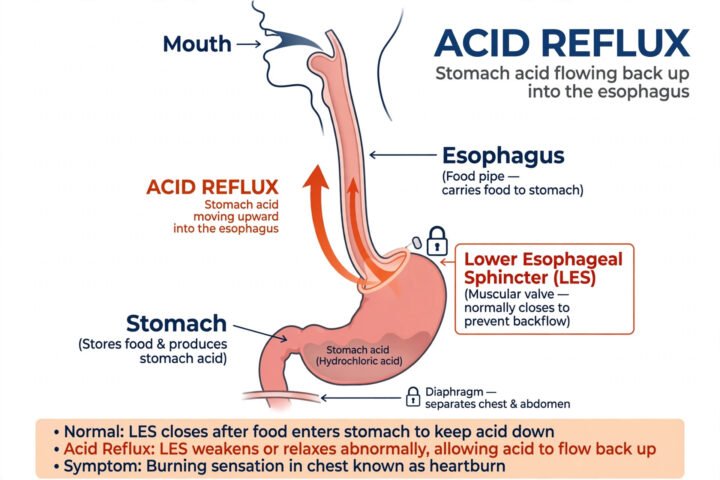
How acid reflux happens: stomach acid moves upward past the lower esophageal sphincter into the esophagus, where it can cause the burning feeling known as heartburn.
GERD is not just a bad episode. The NIDDK describes GERD as a more severe, long-lasting condition in which acid reflux causes repeated bothersome symptoms, or complications. Frequent acid reflux, acid reflux that wakes you at night, or acid reflux needing medicine most days is the pattern to discuss with a clinician, because ongoing exposure can irritate the esophagus and other conditions can mimic reflux.
What are the symptoms of acid reflux and GERD?
The classic symptom of acid reflux is heartburn: a painful burning feeling in the middle of the chest, behind the breastbone, that rises toward the throat. The second classic symptom is regurgitation — stomach contents coming back up so you taste food or sour acid in your mouth or throat.
The NIDDK lists other GERD symptoms, including chest pain, nausea, problems swallowing or pain when swallowing, a chronic cough, and hoarseness. Nighttime acid reflux can also break sleep, as covered in our guide to why you wake up at 3am. Not everyone with GERD gets heartburn, so no single symptom rules acid reflux in or out.
Can acid reflux cause heart palpitations? Acid reflux can cause chest discomfort that feels alarming and is hard to tell apart from heart symptoms. Palpitations — a racing, pounding, or fluttering heartbeat — should not simply be attributed to acid reflux. They need medical evaluation, especially with chest pain, breathlessness, dizziness, or fainting.
How can you relieve acid reflux fast?
When acid reflux flares, the fastest safe steps are mechanical, not exotic. Get upright and stay upright: gravity helps keep stomach contents down. Loosen a tight belt or waistband. Do not lie down, do not eat more food to "soak it up," and sip plain water if that feels soothing — staying sensibly hydrated matters generally, as our guide to how much water you should drink explains. Avoid trigger foods at that moment, especially acidic, spicy, or fatty foods, and avoid tobacco and alcohol.
| Option | How it is used | Honest limits |
|---|---|---|
| Sitting or standing upright | Get up, stay upright, loosen tight clothing | Helps the current episode; does not treat frequent GERD |
| Antacids (over the counter) | Short-term relief of occasional heartburn, as directed on the label | If symptoms do not improve with over-the-counter medicines, see a doctor, per the NIDDK |
| Stopping trigger foods and late meals | Avoid foods that trigger your symptoms; finish eating well before bed | Prevention more than instant relief; triggers vary by person |
| Pickle juice or vinegar drinks | Popular online remedy | No research support; acidity can irritate the esophagus — see evidence check below |
That is the honest version of "fast." Antacids can settle an occasional episode and posture helps straight away, but nothing home-based fixes frequent acid reflux in minutes. Needing relief most days means a pattern that needs the steps below and a clinician's input.
Why is acid reflux worse at night?
Acid reflux is often worst in bed for simple mechanical reasons: upright, gravity helps keep stomach contents down; lying flat removes that help, so acid can reach the esophagus more easily and stay longer. A late, large meal worsens it, because the stomach is still full when you lie down. Nighttime acid reflux can fragment sleep and leave a sore throat, cough, or hoarse voice by morning.
2-3 hours — finish eating this long before bedtime, per the ACG guideline, which also recommends elevating the head of the bed for nighttime symptoms and avoiding meals close to bedtime.
The fixes are practical: avoid meals within 2-3 hours of bedtime, and elevate the head of the bed for nighttime symptoms, per the ACG. The NIDDK describes raising your head and upper back 6-8 inches during sleep, using a foam wedge or extra pillows. A wedge lifting the whole upper body works better mechanically than pillows under the head alone. The ACG also recommends weight loss for people with GERD who have overweight or obesity, and both sources advise stopping tobacco.

Sleeping with the head and upper back raised on a foam wedge — the NIDDK describes raising the head and upper back 6-8 inches — can help nighttime acid reflux.
A calm nighttime wind-down, with the head of the bed raised, suits the slower evening routine that helps nighttime acid reflux settle.
What medicines help acid reflux and GERD?
For classic symptoms — heartburn and regurgitation with no alarm symptoms — the ACG guideline strongly recommends an 8-week trial of empiric treatment with a proton pump inhibitor, or PPI, taken once daily before a meal. Timing matters: the guideline says a PPI should be taken 30-60 minutes before a meal, rather than at bedtime. PPIs reduce stomach acid production, and the guideline recommends a PPI over an H2 receptor antagonist (H2RA) for healing erosive esophagitis, where the esophagus lining has been damaged by acid.
Two cautions keep this honest. First, this is guideline information, not a prescription: discuss a PPI with your clinician or pharmacist, especially if you take other medicines or have alarm symptoms. Second, a trial is not meant to be endless — the ACG recommends trying to discontinue the PPI after a response to the 8-week course. Lifestyle measures run alongside medicine: weight loss if you have overweight or obesity, no late meals, no tobacco, avoiding your trigger foods, and head-of-bed elevation.
Triggers are personal. A food diary can show which foods precede your acid reflux rather than banning whole food groups on suspicion — the same measured approach this site takes to whether sugar causes inflammation.
Does pickle juice or alkaline water help acid reflux?
Short answer: there is no good evidence that either treats acid reflux, and pickle juice could make it worse. Cleveland Clinic states plainly that no research supports drinking pickle juice for heartburn. The vinegar in pickle juice is acidic, and that acidity can irritate the esophagus and stomach — the opposite of what irritated tissue needs. The probiotic theory also fails for most products, because most shelf pickles are pasteurised, so they do not supply the live cultures the theory depends on.
Alkaline water fares little better. The finding behind the claim is a laboratory result: water at pH 8.8 deactivated pepsin in vitro — in a lab dish, not in people. There is no human clinical evidence that alkaline water treats reflux. Neither product is endorsed here; apply the same scepticism this site uses for strep throat symptoms and treatments. Acid reflux improves with posture, timing, weight, tobacco cessation, and, when needed, guideline-based medicine.
When does acid reflux need a doctor?
See a doctor if you suspect GERD, or if acid reflux symptoms do not improve with over-the-counter medicines and lifestyle changes, the NIDDK advises. Book promptly, and do not simply keep escalating home treatment, if you have any alarm symptoms: difficulty swallowing, painful swallowing, unexplained weight loss, gastrointestinal bleeding, vomiting blood, black stools, anaemia, or persistent vomiting. The ACG guideline says endoscopy — a camera test of the esophagus and stomach — should be the first test for people presenting with dysphagia (trouble swallowing) or other alarm symptoms such as weight loss or gastrointestinal bleeding, and for people with multiple risk factors for Barrett's esophagus.
One boundary is absolute. Chest pain or pressure, pain spreading to the arm, jaw, or back, breathlessness, or sweating should never be assumed to be acid reflux. Those can be signs of a heart problem. Call 911 or your local emergency number and get urgent help. Have chest pain assessed as an emergency first.
Frequently asked questions
How do you relieve acid reflux fast at home?
Sit or stand upright and stay upright, loosen tight clothing around your waist, and do not lie down or eat more. An over-the-counter antacid, used as directed, can settle an occasional episode of acid reflux. Avoid acidic home remedies such as pickle juice, which can irritate the esophagus. If episodes are frequent, fast fixes are not enough — discuss GERD assessment and guideline-based treatment with your clinician.
Why is my acid reflux worse at night?
Lying flat removes gravity's help in keeping stomach contents down, so acid reflux reaches the esophagus more easily, especially after a late or large meal. The ACG guideline recommends avoiding meals within 2-3 hours of bedtime and elevating the head of the bed for nighttime symptoms. The NIDDK describes raising the head and upper back 6-8 inches with a foam wedge or extra pillows during sleep.
How long should you take a PPI for acid reflux?
For classic heartburn and regurgitation with no alarm symptoms, the ACG guideline recommends an 8-week trial of a PPI taken once daily, 30-60 minutes before a meal rather than at bedtime. After a response, the guideline recommends trying to discontinue it. Do not start, stop, or extend a PPI without discussing it with your clinician, especially if symptoms persist or alarm symptoms are present.
Can acid reflux cause heart palpitations?
Acid reflux can cause chest discomfort that feels frightening and can be confused with heart symptoms, but palpitations themselves should not be blamed on acid reflux without assessment. A racing, pounding, or fluttering heartbeat needs medical evaluation. If palpitations come with chest pain or pressure, breathlessness, dizziness, fainting, or pain spreading to the arm, jaw, or back, seek emergency care immediately rather than assuming reflux is the cause.
Conclusion
Acid reflux is stomach contents flowing back into the esophagus; GERD is its more severe, persistent form. For a flare, upright posture and an occasional antacid help. For a pattern, the evidence points to finishing meals 2-3 hours before bed, raising the head of the bed 6-8 inches, losing weight if you have overweight or obesity, quitting tobacco, avoiding your personal trigger foods, and — for classic symptoms without alarm features — an 8-week PPI trial timed 30-60 minutes before a meal, reviewed with your clinician.
Skip the shortcuts with no evidence behind them, such as pickle juice and alkaline water, and take the warning signs seriously: trouble swallowing, weight loss, bleeding, or persistent vomiting need prompt assessment, and chest pain is an emergency until proven otherwise. Discuss persistent acid reflux with your clinician or dentist, who can arrange the assessment that self-treatment cannot replace.
Sources
- National Institute of Diabetes and Digestive and Kidney Diseases (NIDDK) — Acid Reflux (GER & GERD) in Adults (definitions of GER and GERD, symptoms including heartburn and regurgitation, lifestyle measures including weight loss, raising the head 6-8 inches, quitting smoking, and when to see a doctor).
- Katz PO et al. — ACG Clinical Guideline for the Diagnosis and Management of Gastroesophageal Reflux Disease, American Journal of Gastroenterology 2022;117:27-56 (8-week empiric PPI trial, PPI timing 30-60 minutes before a meal, trying to discontinue after response, endoscopy for dysphagia and alarm symptoms, weight loss, avoiding meals within 2-3 hours of bedtime, tobacco avoidance, trigger foods, and head-of-bed elevation).
- Cleveland Clinic — Can Drinking Pickle Juice Help Your Acid Reflux Symptoms? (no research supports pickle juice for heartburn; vinegar acidity can irritate the esophagus and stomach; most shelf pickles are pasteurised).
Medical disclaimer: This article is educational information only and is not medical advice. It does not diagnose acid reflux, GERD, or any other condition, and it does not prescribe medicine for any individual. Chest pain can be an emergency — call 911 if you have chest pain or pressure. If you have persistent or severe symptoms, discuss them with your clinician or dentist.





0 Comments